

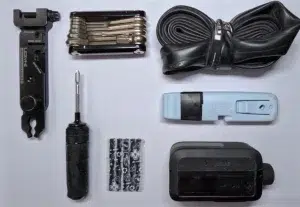

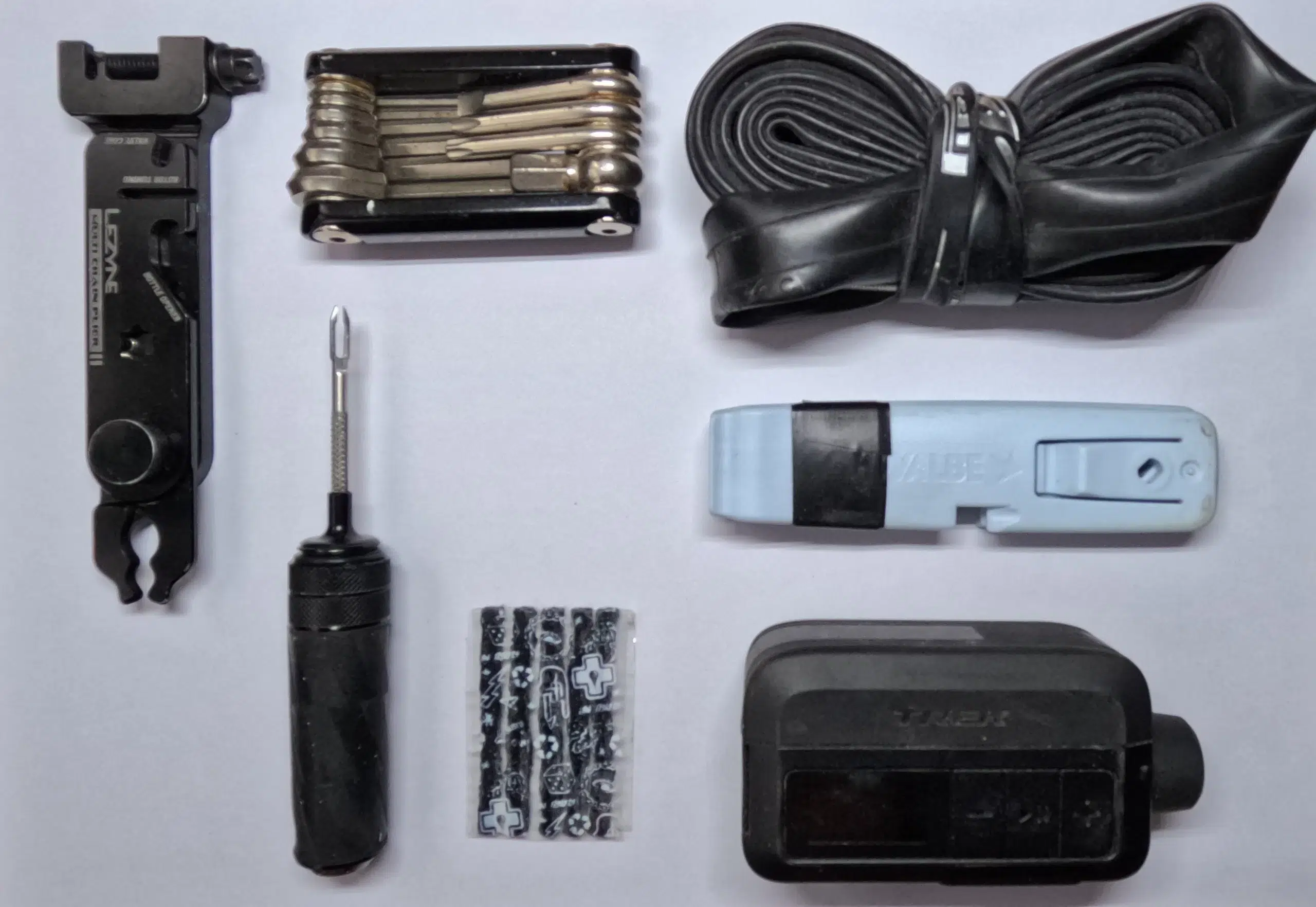
The most useful bike essentials are not always the shiny things you see in cycling shops. For most cyclists, the tools worth carrying are the ones that stop a small problem becoming a ruined day: a multi-tool, mini pump, tyre levers, patch kit and a compact lock.
Quick answer: A beginner’s bike tool kit should include a cycling multi-tool, mini pump, spare inner tube, tyre levers and a puncture repair kit. Together they’ll deal with the most common mechanical problems and fit neatly into a small saddle bag or backpack.
What Should a Bike Tool Kit Include?
If you’re putting together your first bike tool kit, these are the five essentials I’d recommend buying before spending money on expensive gadgets or accessories. They’re lightweight, inexpensive and will deal with the problems you’re most likely to face, whether you’re cycling to work, riding at the weekend or just heading out for a few miles.
Why Every Cyclist Needs a Bike Tool Kit
It doesn’t matter whether you’re five minutes from home or twenty miles into a ride, punctures and loose bolts never seem to happen at a convenient time. The good news is that most of the problems that leave people pushing their bike home are actually pretty simple to fix if you’ve got the right tools with you.
You don’t need to carry half a bike shop around. A basic bike tool kit is enough to deal with the common issues like a puncture, slipping saddle or loose mudguard, giving you the confidence to get yourself moving again instead of waiting for someone to rescue you.
💡 Slow Lane Tip: The best bike tool kit is the one you actually carry. There’s no point buying the biggest multi-tool or the fanciest pump if it spends its life in the garage. Keep your kit small enough that it lives on your bike, ready for every ride.
1. Cycling Multi tool
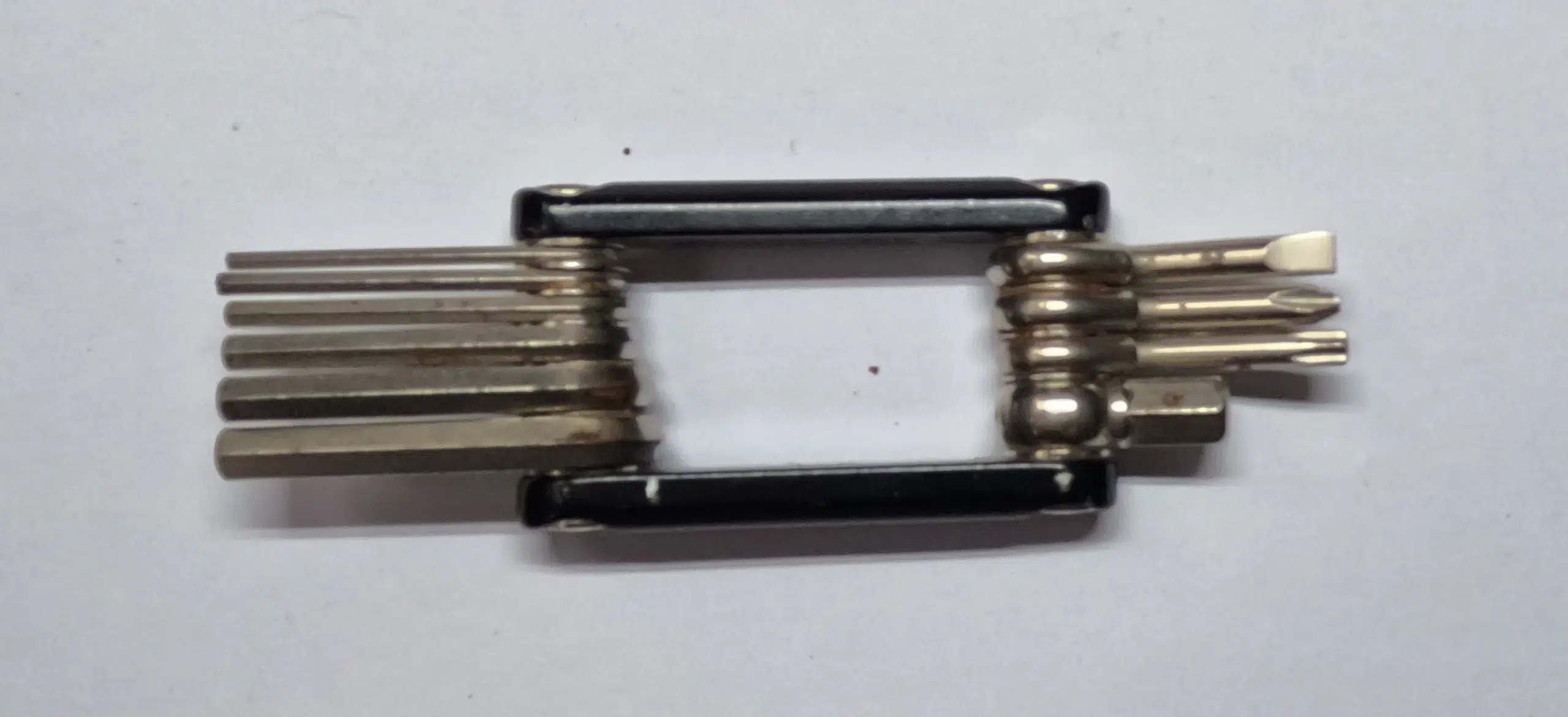
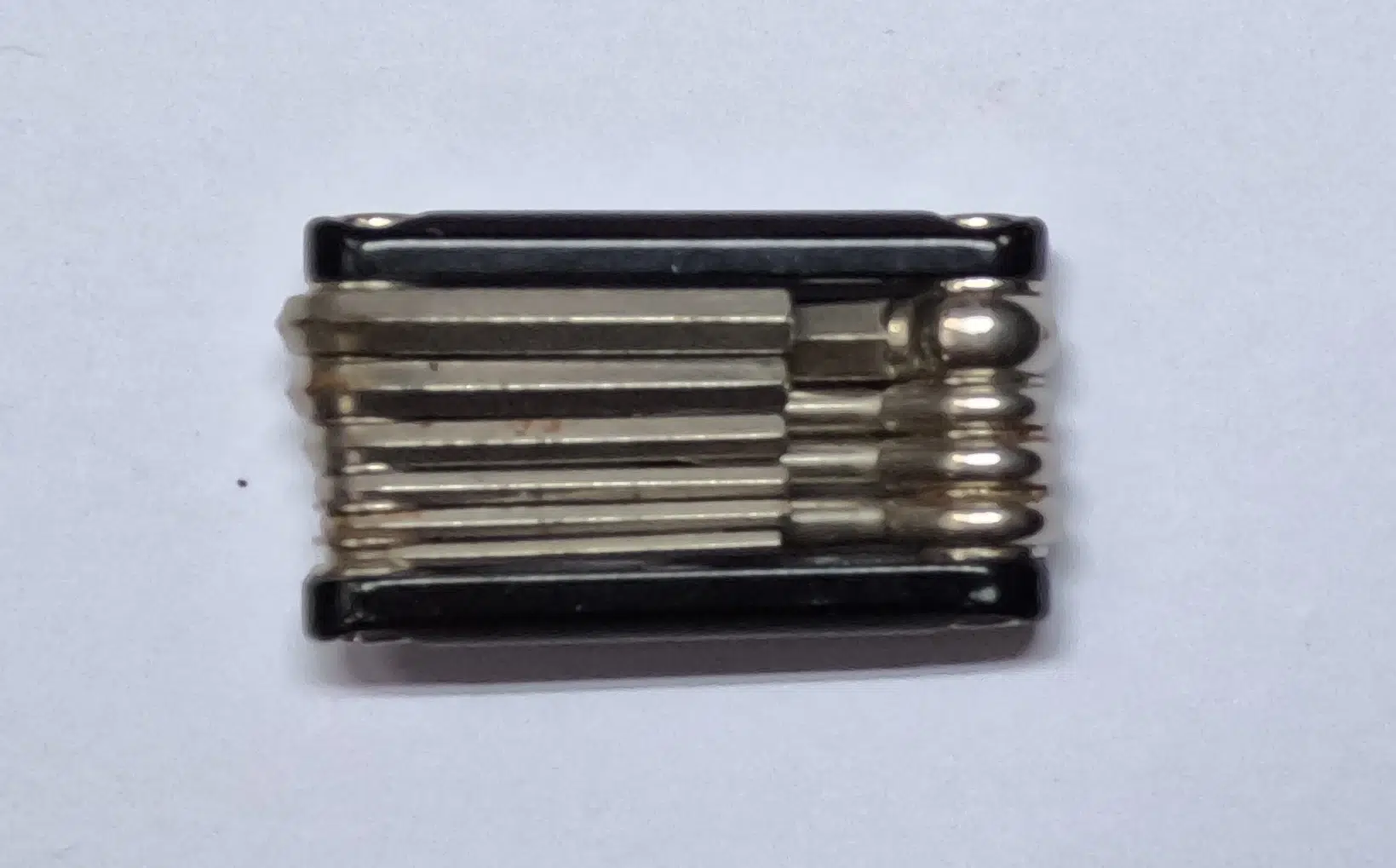
A cycling multi-tool is the first thing I’d put in any bike tool kit.
Most bikes are held together with a handful of Allen bolts. Your saddle, seatpost, bottle cage, mudguards, rack, handlebars and brakes can all loosen slightly over time. You might not notice it at home, but you will definitely notice it when your saddle starts dipping halfway into the ride.
A decent multi tool should include:
- 4mm, 5mm and 6mm Allen keys
- A Phillips screwdriver
- A flathead screwdriver
- A Torx key if your bike uses one
- Ideally, a chain tool (very optional)
You do not need the biggest or most expensive one in the shop. A basic one will work just fine for the amount of time you hope to be keeping it left in your bag. Also make sure you don’t pick up the largest tools in the shop, the attachments may look great but remember, you need to carry it around and a large multi tool can actually work against you when working on some fiddly areas on the bike. For commuting, I would rather have something small, reliable and easy to leave in the bag permanently.
A multi-tool is useful for:
- Removing a wheel if you have a puncture
- Tightening a loose saddle
- Adjusting a slipping seatpost
- Fixing a rattling mudguard
- Straightening accessories
- Making small brake or gear adjustments
- Sorting a loose bottle cage or rack bolt
This is one of those cycling essentials that does not feel exciting until you need it.
2. Mini pump
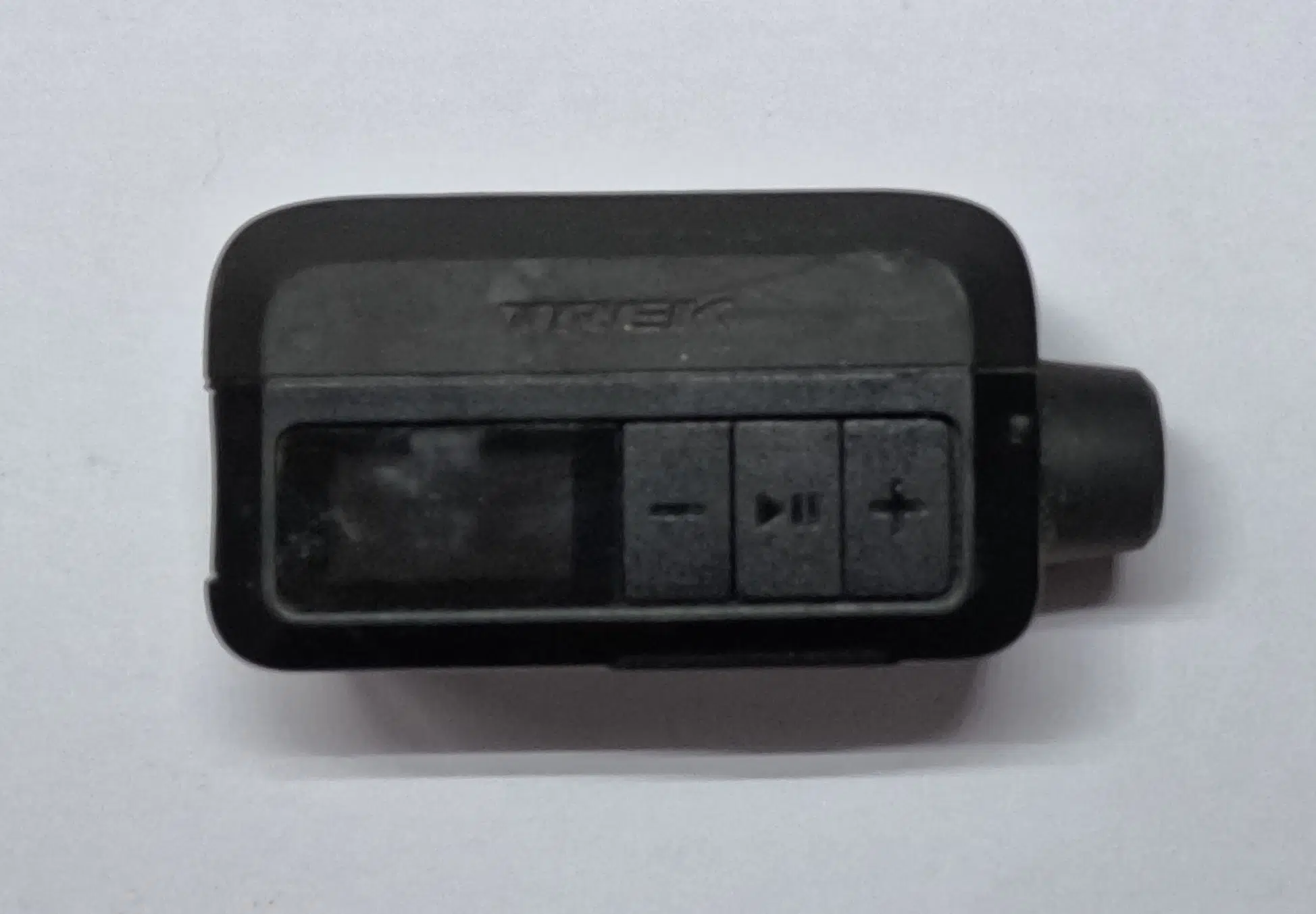
A mini pump is boring, but it is essential.
If you get a puncture and cannot put air back into the tyre, the rest of your repair kit is basically decorative. You can have tyre levers, patches and a spare tube, but without a pump you are still walking.
There are plenty of options, but I’d keep it simple. A basic mini pump is reliable, easy to use and small enough to fit into most bike tool kits. CO₂ inflators and electric pumps have their place, but they’re not where I’d suggest beginners spend their money.
Look for a pump that:
- Fits your valve type
- (most have attachments, just make sure the correct one is on for your tube)
- Is small enough to carry every day
- Does not feel like it will snap in half when used
If you ride narrow road tyres, pressure matters more. If you ride wider commuter tyres, you can often get enough air in to ride home carefully, even if it’s not perfect. Tyre pressures and tyre choice could be a whole article in itself but I touch on it briefly in the article on cycling in the rain.
3. Tyre levers and spare tube
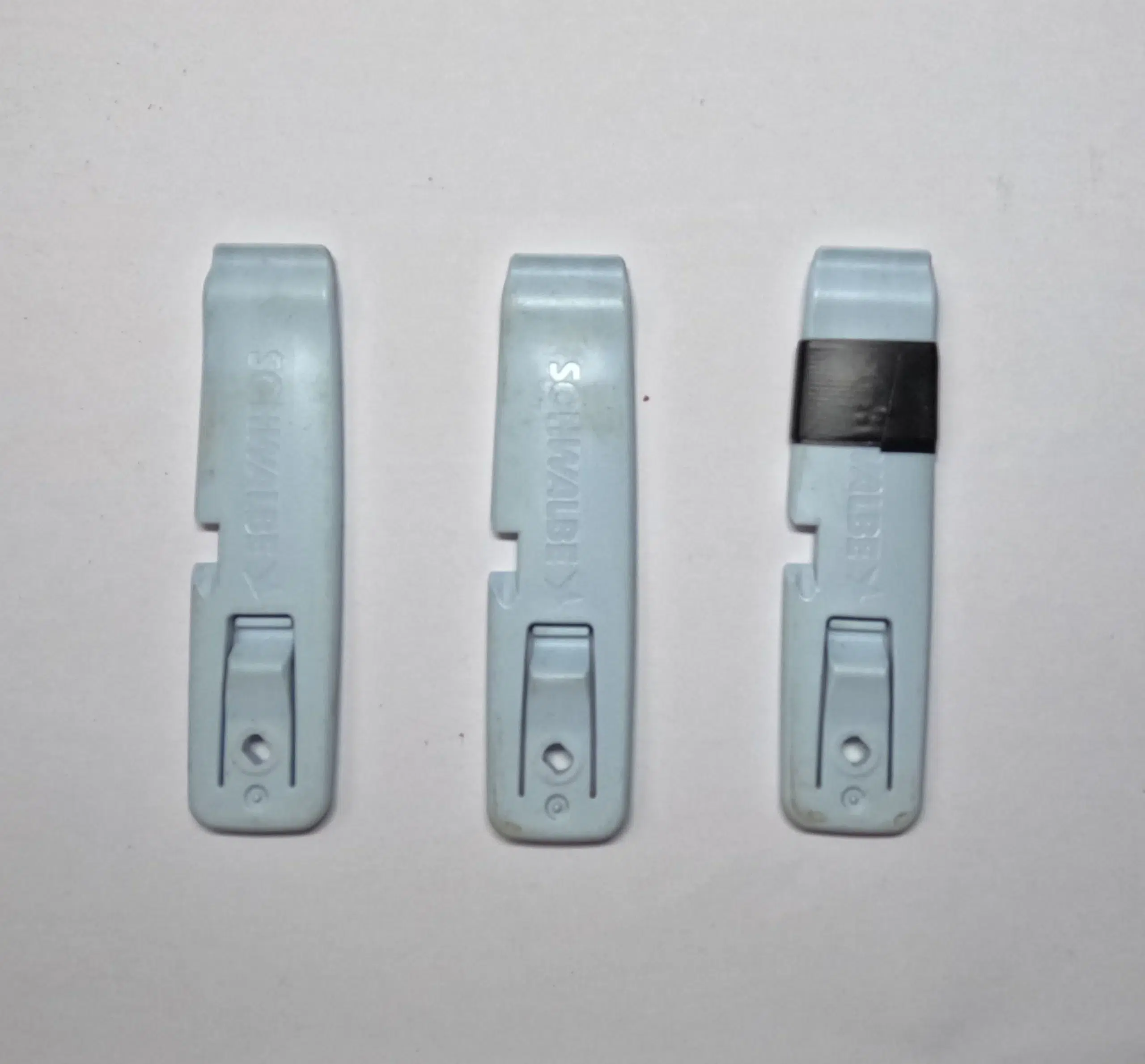
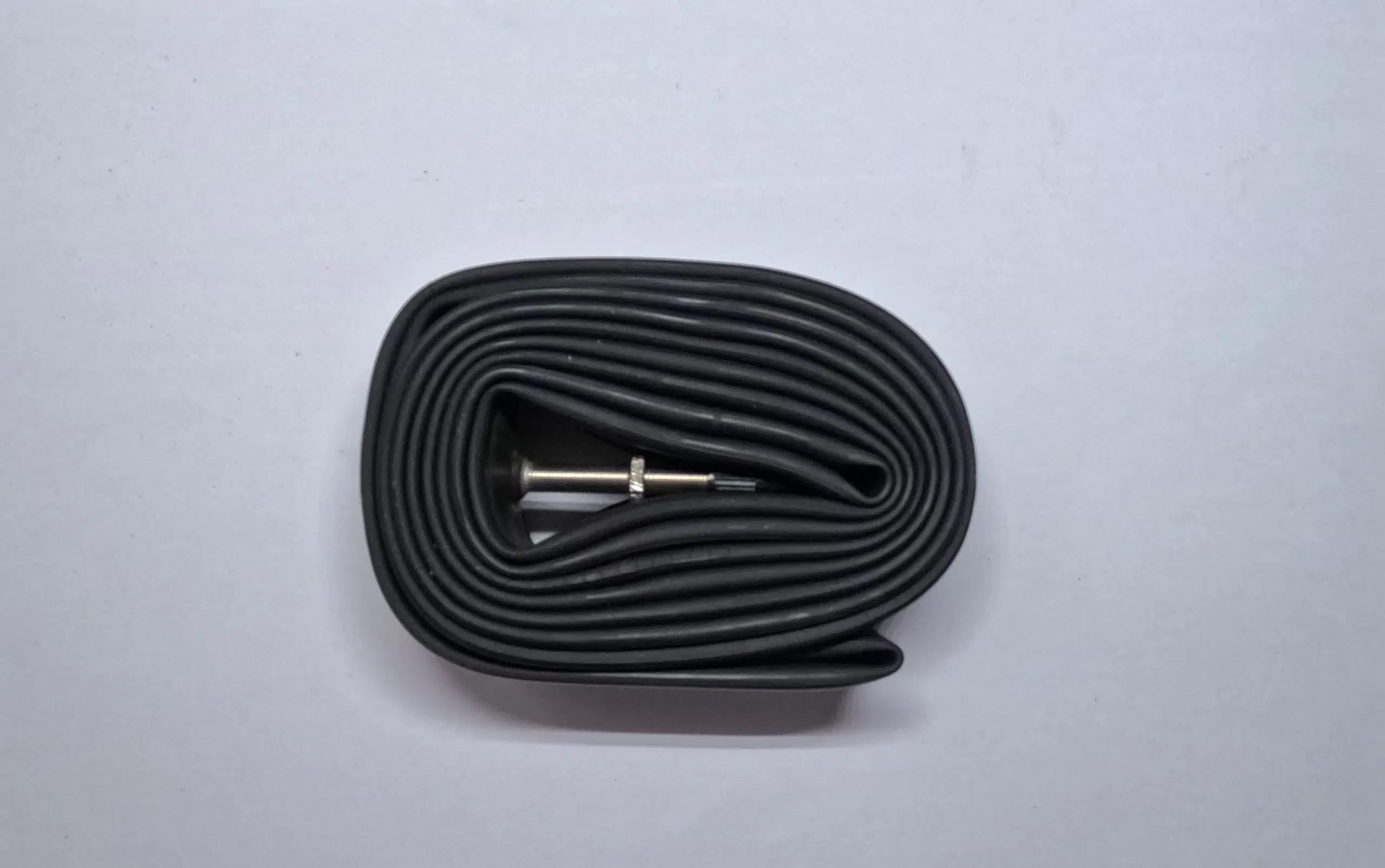
Tyre levers are tiny, cheap and very easy to forget but essential tools to have.
Some tyres can be removed by hand, but this takes a little practice and is especially hard when your hands are cold, wet or covered in road grime. A pair of plastic tyre levers makes removing the tyre much easier.
I would avoid metal tyre levers for everyday commuting unless you really know what you are doing, because they can damage rims or tubes.
Tyre levers help you:
- Remove the tyre from the rim
- Access the inner tube
- Check for glass, thorns or sharp debris
- Replace or patch the tube
The important thing is not just carrying them. You should practise using all of the tools but especially these atleast once at home. It’s much easier to learn in your kitchen than in the rain outside work.
4. Patch kit
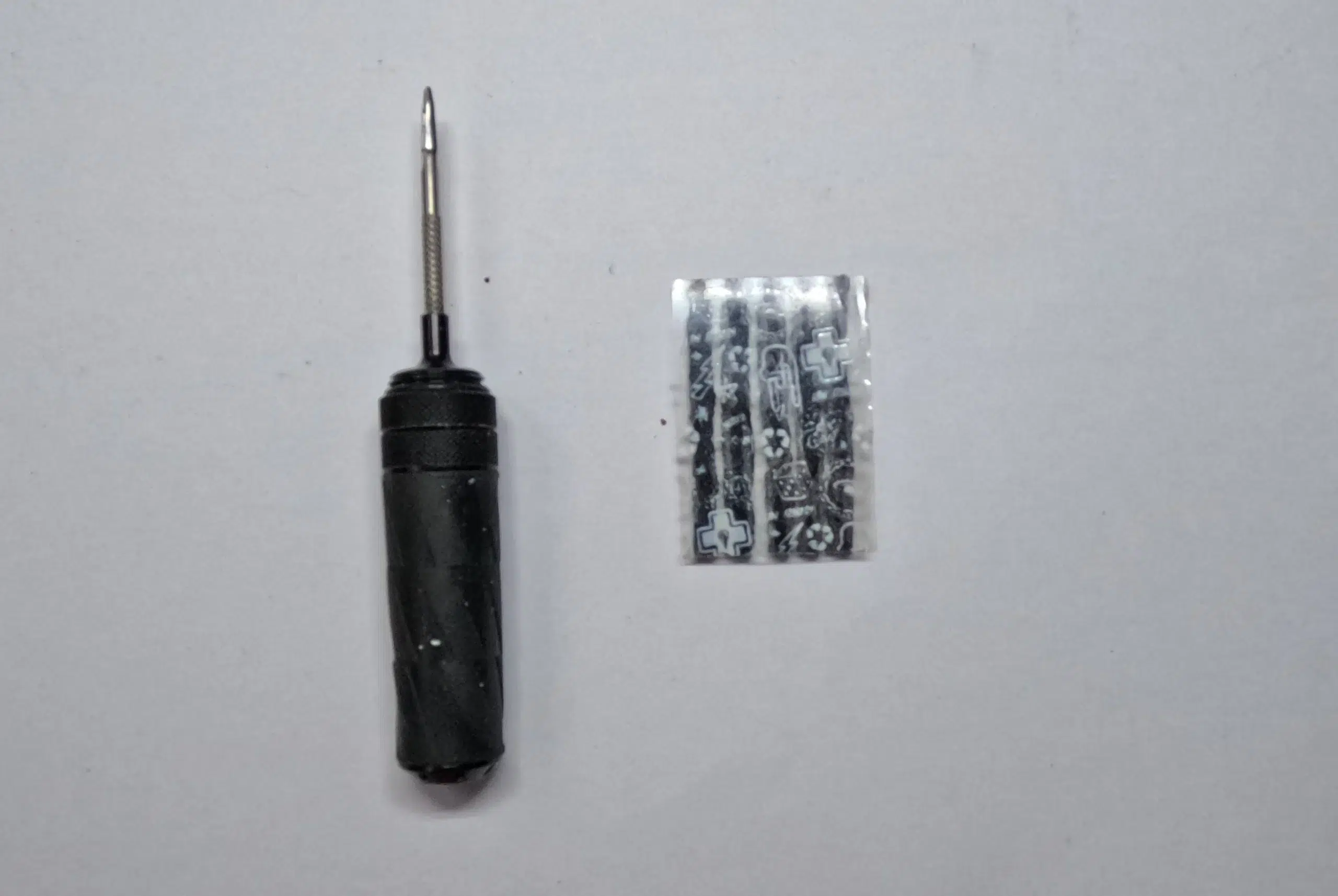
A patch kit is the backup to the backup, it truly is the last resort on this list of tools.
I would highly recomend carrying a spare inner tube and skipping patches. However if you have a mythically bad day and puncture your spare inner tube as well, then one of these tools can be the difference between cycling or walking home. A small patch kit weighs almost nothing and gives you another option if things go wrong.
For example:
- Your spare tube is the wrong size
- You already used your spare tube and forgot to buy another one
- You get a second puncture
- The puncture is small and easy to patch
- You want to repair the tube properly later
There are two main types:
- Traditional glue patch kits
- Self-adhesive patch kits
For most riders, self-adhesive patches are convenient because they are quick and clean. Traditional patches can be more reliable if applied properly, but they take a bit more patience.
Either way, check the kit occasionally. Old glue dries out, patches disappear, and the little sandpaper square always seems to vanish when you need it. This is why a patch kit deserves a place on a bike commuting essentials list. It is not glamorous, but it gives you options when everything else has failed.
Three Useful Extras for Your Bike Tool Kit
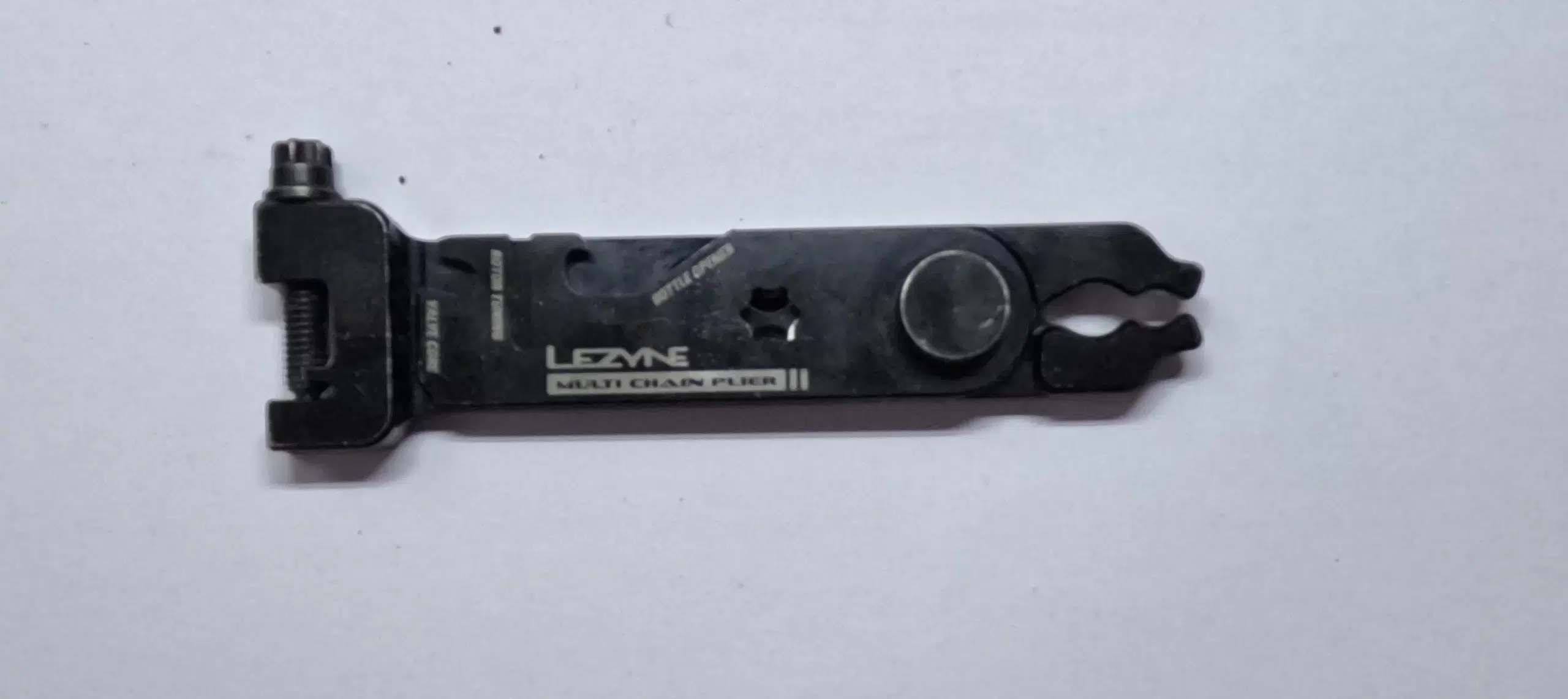
Strictly speaking, above is an essential list but there are a few other things I take on any ride.
If I was building the perfect small tool kit, I would carry both:
- Chain repair tool
- Spare quick links
- Electricians tape
Sometimes you’re out in the middle of nowhere and your chain breaks. It sounds like a ride-ending problem, but with the right tools it’s often a quick and easy fix. The chain tool above has a few magnetic slots on the back for spare quick links, so you can get moving again in just a few minutes.
You’ll also notice there’s some tape wrapped around the tyre levers, and that’s no accident. Small problems on a ride can quickly become frustrating if you don’t have a temporary fix. A bit of tape can be surprisingly useful for securing a loose spoke, holding a cable in place, or stopping a bolt from rattling out until you can make a proper repair at home.
5. Compact lock
A lock is slightly different from the other tools, but for real city riding it belongs on this list. Not every ride is just door to door. You might stop at a shop, pop into a café, leave the bike outside the office, or lock it near a train station. A compact lock gives you options.
For short stops in low-risk areas, a compact D-lock or folding lock might be enough. For longer stops, city centres, train stations or expensive bikes, you need something more substantial serious.
A good lock setup should:
- Lock the frame to something solid
- Ideally secure at least one wheel as well as the frame
- Be hard to cut quickly
- Be practical enough that you actually use it
There is no perfect lock. The best lock is the one that matches the risk and does not make carrying it around a miserable task. A useful trick is to leave a heavier lock at work if you have a regular secure place to park. Then you can carry a lighter lock for small stops during the day.
Where Should You Carry Your Bike Tool Kit?
There are a few good ways to carry your bike tool kit, and the best one usually comes down to the type of riding you do.
Saddle bag
Best for: small repair kit
A saddle bag is ideal for a tube, tyre levers, patch kit and multi-tool. It stays on the bike, so you are less likely to forget it.
Frame bag
Best for: slightly larger kit
A frame bag gives you more room without needing a backpack. It is useful if you also carry snacks, gloves or a small power bank.
Pannier
Best for: work commute setup
If you already use panniers, just keep a small repair pouch inside one. The risk is forgetting it if you swap bags.
Backpack
Best for: simple setup
A backpack works, but tools are easy to remove and forget. If you use a backpack, keep everything in one small pouch so it always moves together.
My preference would be a small saddle bag for the true bike commuting essentials, then anything extra in a pannier or backpack.
What’s in My Bike Tool Kit?
For a simple daily commute, I would carryWhether I’m cycling to work or heading out for a longer ride, this is the bike tool kit I would carry:
- Multi-tool
- Mini pump
- Tyre levers
- Patch kit
- Spare inner tube
- Compact lock
- Disposable gloves
- Small pack of tissues or wipes
That sounds like a lot written down, but most of it fits in a small saddle bag.
The point is not to prepare for every possible disaster. If your wheel collapses or your chain snaps badly, you are probably not fixing that properly at the roadside. The point is to deal with the common problems that are easy to solve.
Do you need all this for a short ride
For a very short ride, you can get away with less. If you only ride one or two miles and have easy public transport, you might decide it is not worth carrying much.
But for most people, once your riding regularly gets beyond walking distance, these bike tool kit essentials make sense. They are small, cheap and easy to leave on the bike. The best kit is the one you do not have to think about.
FAQ: Common questions about bike tool essentials
What should I carry in my saddle bag for daily riding?
A good daily riding saddle bag should include a spare inner tube, tyre levers, patch kit, multi-tool and maybe a small quick link if your chain uses one. You can carry your mini pump on the frame if it does not fit inside the bag.
Is a mini pump better than CO2 for punctures?
For most beginners, yes. CO2 is quick, but it is single-use and easier to mess up. A mini pump is slower but more reliable because you can keep using it.
Do I need a patch kit if I already carry a spare tube?
I would still carry one. A patch kit is tiny and gives you another option if your spare tube fails, is the wrong size, or you get unlucky with a second puncture.
Should I carry a chain tool?
If your multi tool includes one, great. If not, I would not worry too much at the very beginning. A chain issue is less common than a puncture, but if you ride longer distances, a chain tool and quick link are worth considering.
Do I need a lock on every ride?
If your bike goes directly from your house to secure storage, maybe not. But most riders stop somewhere eventually. A compact lock gives you flexibility and stops quick errands becoming stressful.
Final thoughts
Bike riding gets easier when you remove small sources of stress. You do not need every accessory and you don’t need to ride around with half a bike shop in your bag. You just need a small kit that deals with the most common problems.
If this article was helpful. I’ve made an E-Book to help you in your first few weeks of riding. Just click the link below.
Any questions, get in touch using the contact page.
– Dan