


It’s completely normal to ask, “is cycling to work dangerous?” before your first commute.
For many people, the idea of a beginner cycle commute feels completely different from a relaxed weekend ride. Traffic seems louder, junctions look more complicated, and everything appears to be moving faster than it probably is. From inside a car, cyclists can look exposed, and that image tends to stick. When you’re new, it’s easy to assume everyone else is more confident and more capable than you.
Table of Contents
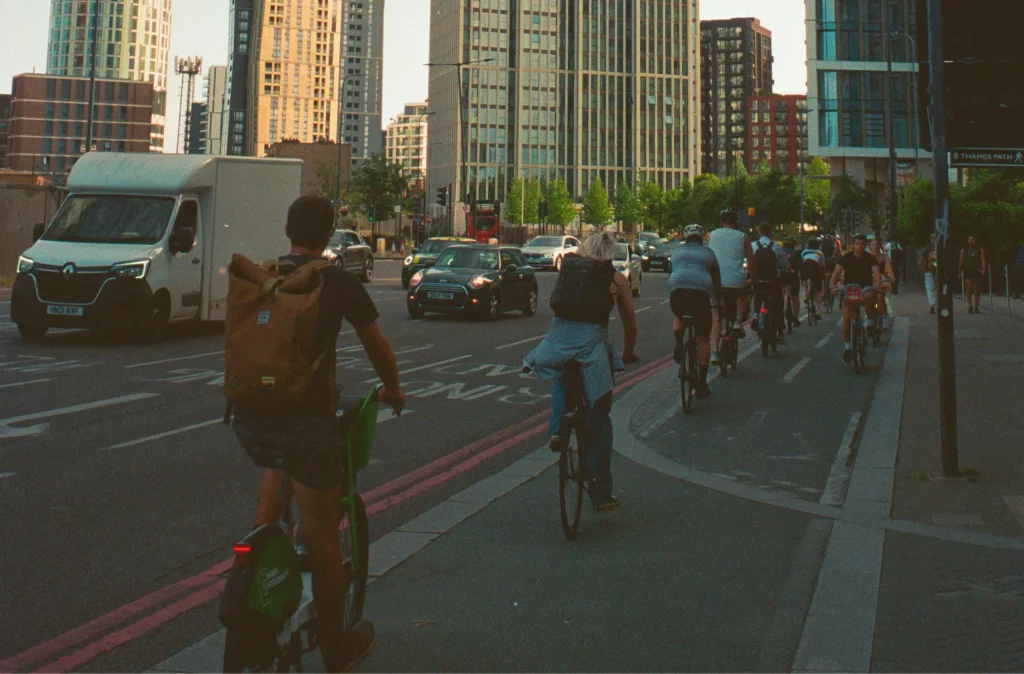
The reality is more balanced than that. Cycling in traffic for beginners can absolutely feel intimidating at first, but most of that fear comes from unfamiliarity rather than constant danger. What feels overwhelming in the beginning often becomes manageable surprisingly quickly.
Why It Feels Bigger Than It Is
When you’re new to riding on roads, your senses are heightened. Engine noise feels closer than it is, buses feel enormous, and passing cars seem to be travelling faster than they probably are. That reaction is normal. When something is unfamiliar, your brain treats it as a bigger threat. It’s no different from when driving felt intense just after you passed your test.
Over time, those sensations become easier to interpret. You begin to understand how traffic flows, you recognise when a driver has seen you, and you get better at reading junctions before you reach them. Confidence doesn’t arrive in one bold moment; it builds gradually, ride by ride, as situations that once felt daunting start to feel routine.
It’s important to remeber that you are supposed to be enjoying your commute, so take a look at a few things we discuss in How to Have Fun Cycle Commuting for Beginners.
Route Choice Is Everything
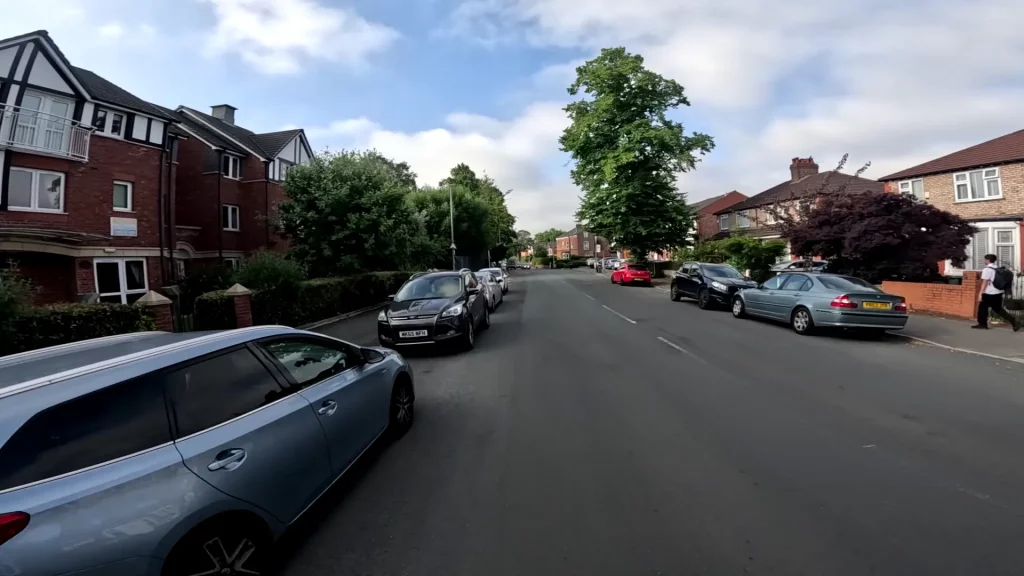
One of the biggest mindset shifts for a beginner cycle commute is realising that you don’t have to follow the same route you would drive.
The fastest route is rarely the right one, and in the early stages calm is far more valuable than speed.
Choosing back streets, quiter roads, park paths or cycle lanes can completely transform how your commute feels. Saving three minutes is rarely worth sacrificing comfort, especially when you’re still finding your feet. One uncomfortable ride on a busy road can dent confidence for weeks, whereas a calm week on quieter roads can build it quickly and steadily.
If you’re nervous about cycling to work, route planning is the biggest lever you can pull. You don’t need to prove you can handle main roads straight away. Confidence grows far more reliably when you give yourself the space to build it.
CyclingUk has a great route planner you can use to find an ideal route local to you for your cycle commute.
Cycling in Traffic for Beginners
Much of the anxiety around cycling in traffic comes from junctions and positioning. You might worry about being in the wrong place at a roundabout, cars overtaking too closely, not knowing when to move out, or holding traffic up behind you. These thoughts are common, especially in the early weeks.
What’s worth remembering is that cycling confidently doesn’t mean cycling aggressively. You have as much right to the road as the cars around you. Being predictable and signalling intent is one of the strongest safety tools you have. Clear movement allows other road users to understand what you’re doing. When you’re predictable, traffic tends to respond predictably, and that’s when cycling to work confidence begins to develop naturally.
Slow Cycling Helps More Than You Think
This is where slow cycling really comes into it’s own. Slow cycling gives you options, and with options comes safety. If you are cycling slow you have more time to react, make decisions and use shared spaces much more comfortably.
A beginner cycle commute isn’t about bravery; it’s about familiarity. Riding at a pace that feels manageable makes traffic far less overwhelming and removes the sense that you’re racing against something. You’re not in a competition with anyone; you’re just enjoying your journey to work.
We discussed this in our article Slow Cycling: How to Build a Cycle Commute You Can Actually Stick With.
You Don’t Need to Be Fearless
There can be subtle pressure in cycling culture to appear confident, to take the lane assertively, or to filter past long queues of cars without hesitation. For commuting, none of that is required. You are allowed to avoid roads that don’t feel right yet, to get off and walk across a complex junction, or take a longer quiter route.
Most experienced commuters once felt unsure. The difference now isn’t personality or bravery; it’s familiarity. They’ve simply repeated the experience enough times for it to feel normal.
Building Confidence Gradually
Rome wasn’t built in a day, and neither will your confidence.
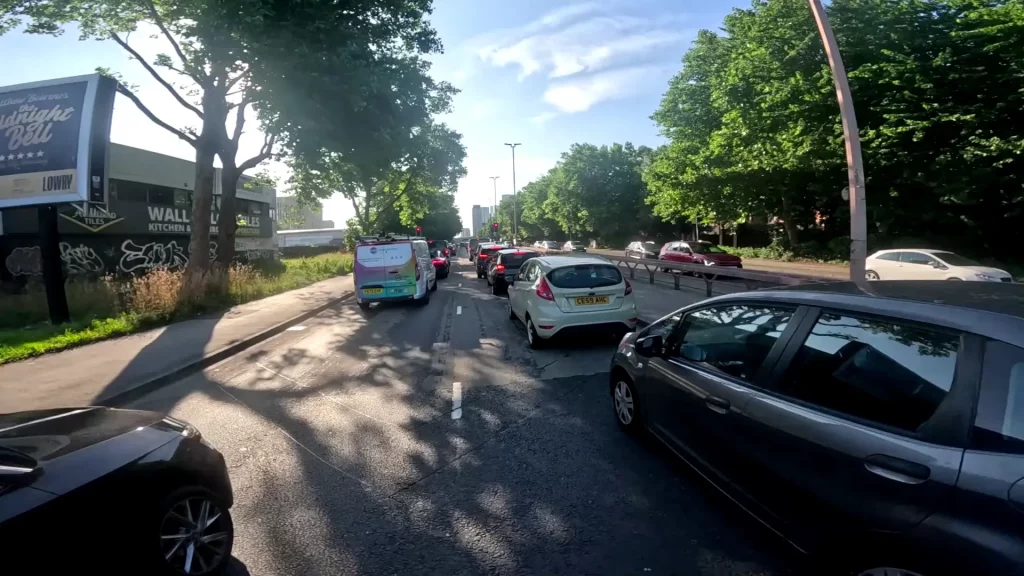
Start small, travel part of the way, or only a few days a week. In the early days small victories turn into long-term habits. As you build up more and more you will find everything becomes easier and suddenly there is a strange comfort of being sat around traffic, or at a set of lights.
Final Thoughts
So, is cycling to work scary? Sometimes, at first. But that feeling usually fades faster than people expect.
With sensible routes, a steady pace, and realistic expectations, a beginner cycle commute becomes far less dramatic than it seems from the outside. Confidence builds quietly, almost without you noticing, and once it’s there, it tends to stay.
If this article was helpful, I’ve made an E-Book to help you in your first few weeks of cycle commuting. Just click the link below.
Any questions, get in touch using the contact page.
– Dan