


🛣️ Topic: Cycle Signs for Cyclists and Drivers
🚴 Audience: Cyclists, Drivers & New Commuters
⏱️ Read Time: 8 Minute Read
Cycle signs are used to guide cyclists, warn road users of potential hazards, and indicate where cycling is permitted or restricted. Common cycle signs include cycle lane signs, shared-use path signs, cycle route markers, advanced stop lines and cycle path markings. Understanding bicycle road signs and their meanings can help cyclists ride more safely and confidently on UK roads.
Quick answer: The most common road signs for cyclists in the UK are cycle lane signs, cycle path signs, shared-use path signs and cycle route markers. These bicycle road signs show where cyclists should ride, where cycling is permitted and how cycle routes connect.
If you’re new to cycling on UK roads, one of the quickest ways to feel out of your depth is realising there are road signs everywhere that suddenly seem much more relevant when you’re not protected by a tonne of metal and an airbag.
What do road signs for cyclists mean?
Cycle Lane Sign
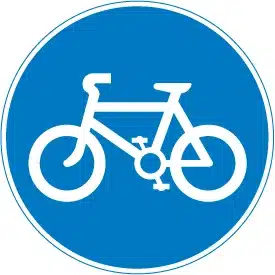
This is probably one of the most common road signs for cyclists you’ll see. It’s the blue circular sign with a white bicycle symbol in the middle.
This sign means the route is specifically designated for cyclists. If pedestrians are shown as well, it usually means a shared-use path rather than a cyclist-only route. But we’ll talk about shared paths later on.
It’s a fairly self explanatory one, but there are some variations where it starts to get a bit confusing. A lot of newer riders assume all blue cycle signs mean exactly the same thing, but it’s worth paying attention to the details.
If it’s cyclist-only, pedestrians shouldn’t be using it. If it’s shared-use, expect the occasional dog lead behaving unpredictably. Always watch out for pedestrians as often they can stray onto these pathways without realising. A maximum speed limit of 15kph or 9mph applies.
No Cycling Sign
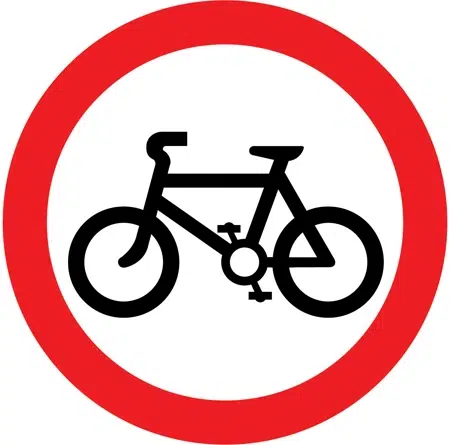
Another very important one. Often seen in city centres, this sign prohibits cycling so pay attention if you see this or you could end up with a telling off or worse a hefty fine. Simple enough but easily lost in a sea of road signs and often by paths that look very appealing to cycle down.
Sometimes this applies to pedestrian zones, footpaths, or areas where cycling would create obvious conflict.If you’re unsure, it’s usually safer to assume the sign means what it says.
Shared Use Path Sign
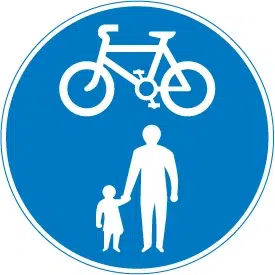
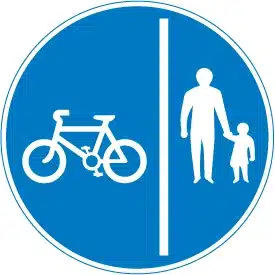
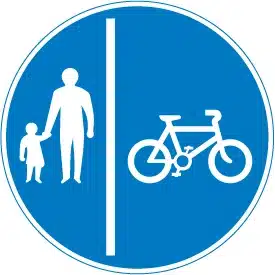
One of the more common road signs for cyclists if you’re commuting through towns or city routes. This usually shows a pedestrian and bicycle together often with an indication of which side both are expected to stick to.
The important bit here is remembering that “shared use” doesn’t mean “mini velodrome”. Always be considerate of walkers and especially if there are children or pets involved. Both can be highly unpredictable and as discussed in the hierarchy of road users you carry the weight of responsibility for avoiding a collision.
Pedestrians often won’t be expecting fast-moving bikes, especially if headphones are involved. A maximum speed limit of 15kph or 9mph applies with a bell being highly recommended.
Toucan Crossing
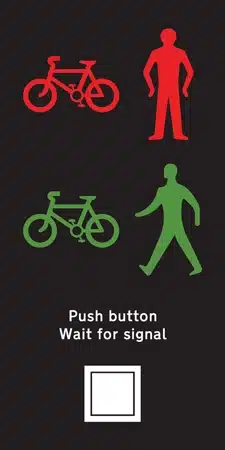
These are signposted by the icons on the crossing itself, often cycle lanes will merge into these as safer ways for cyclists to cross the road in busy city areas. A toucan crossing is basically a crossing where both pedestrians and cyclists can cross legally.
The name exists because “two can cross,” which is the kind of transport department humour we apparently settled on. Unlike standard pedestrian crossings, you can usually remain on your bike rather than dismounting.
If you’re planning commuting routes, these crossings can make certain roads much easier and safer to navigate.We touched on route planning in How to Plan Your First Cycle Commute Route, because small infrastructure details like this can make a surprising difference.
Advanced Stop Line (Bike Box)
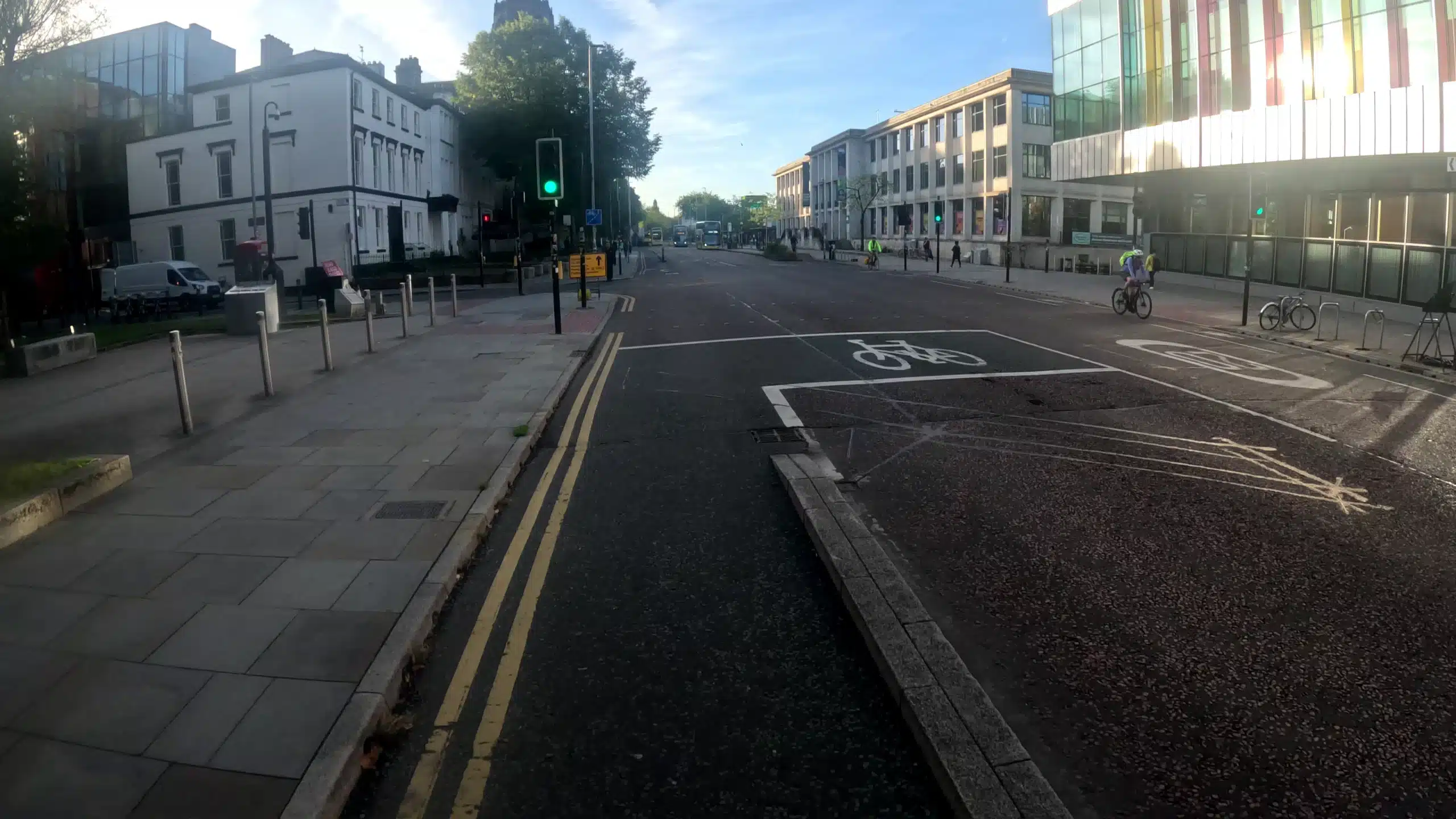
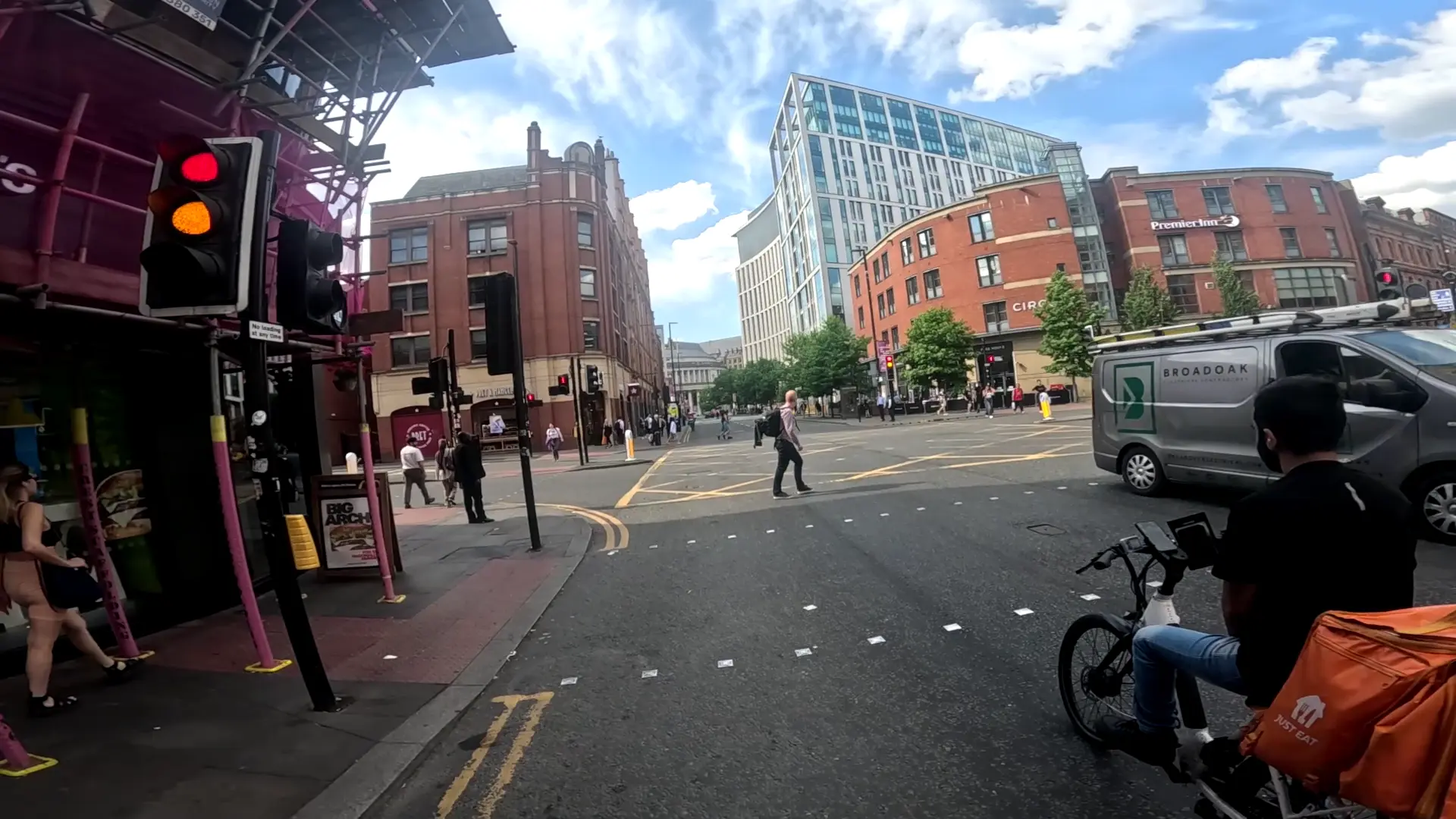
This will be one of the most common features you come across if you cycle in cities. They are more and more common as active travel schemes become embedded in city planning.
The painted box at traffic lights allows cyclists to position themselves ahead of motor traffic while waiting. It improves visibility and gives cyclists a clearer, safer position when setting off.
Unfortunately, these are often occupied by drivers or motorcyclists who have become creatively confused about road markings. As a cyclist, if it’s clear and safe to use, it’s there for you.
If you’re nervous about traffic, articles like Is Cycling to Work Dangerous? cover some of the confidence side of this.
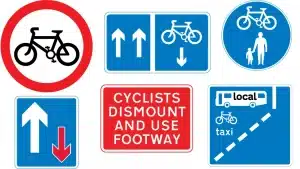
With flow cycle lane
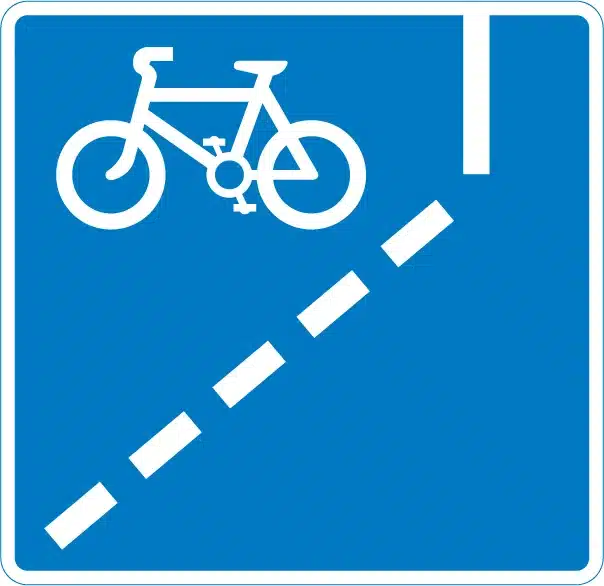
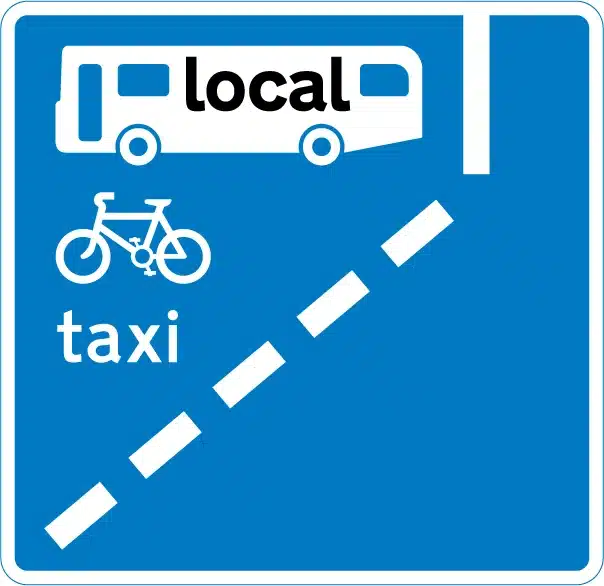
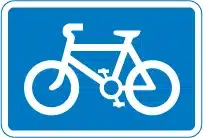
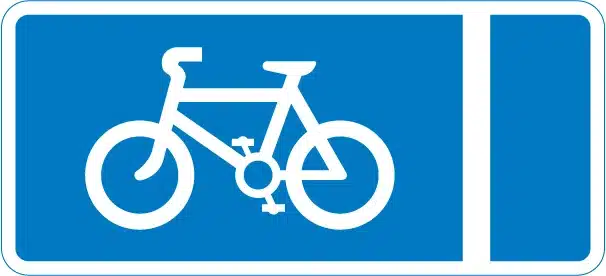
Not all road signs for cyclists are upright signs, road markings matter too.
Painted cycle lanes indicate designated space for cyclists, though the quality varies wildly depending on where you are. Some can be excellent and some can be a perfect way to land yourself a puncture. The sign above include dedicated cycle lanes but also with flow bus and cycle lanes.
The key to remember with cycle lanes is just because they are there, does not mean you are legally obliged to use them. The best option is the safest one and that may not be the cycle lane.
Some are separated with physical bollards but some are painted on, either way they are normally signposted with one of the signs below. Bus lanes are often an ideal way to separate yourself from the majority of the traffic, but be careful buses have large blind spots and drivers often drive in and out of bus lanes to avoid obstacles. So the important thing is to stay aware of your surroundings.
Contraflow cycle lane
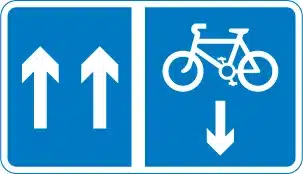
These can look confusing the first time you encounter one, and luckily they are not that common. A contra-flow cycle lane allows cyclists to travel in the opposite direction to motor traffic on one-way streets. They can be very useful for urban commuting, but very confusing if unexpected.
These road signs for cyclists are particularly handy when route planning because they can create shortcuts that drivers simply don’t have access to.
Give Way and Priority Signs
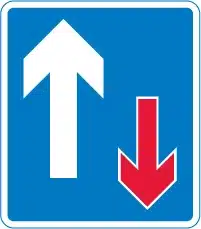
Slightly obvious perhaps, but worth mentioning. Road signs for cyclists are not only cycle-specific signs you should also pay attention to general traffic rules unless signposted specifically as with the contra-flow lanes.
Give way signs.
Priority systems.
Mini roundabout signage.
Temporary road control.
A surprising number of newer cyclists focus entirely on bicycle symbols and forget that normal road rules still apply. Cycling in traffic becomes much easier when you think of yourself as part of the traffic system rather than separate from it. It also helps to be predictable and allows drivers to better anticipate what you will do next.
Temporary Roadworks Signs
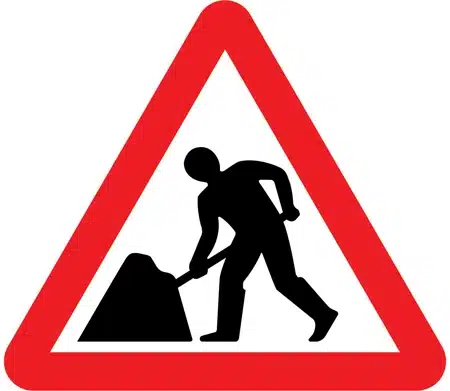
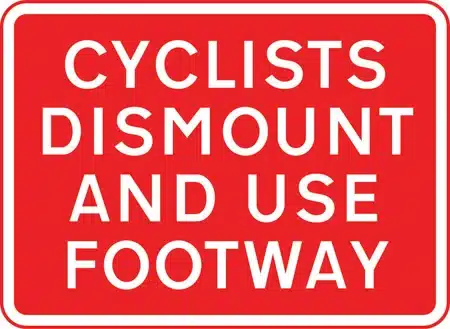
Roadworks create some of the more frustrating road signs for cyclists, but luckily for you it’s easy to filter through the traffic.
Diversions often make sense for cars and almost never for bikes. Temporary narrowing, lane closures, resurfacing notices and temporary traffic lights can all change how safe a route feels.
This is one reason experienced commuters often have a backup route in mind. Unexpected roadworks are one of those practical commuting issues we touched on in Common Cycle Commuter Problems.
Keep an eye out for cycle specific instructions, sometime the roadworks will take over the cycle lane and advice is to use the footway, however this is more about confidence. If you are happy to cycle in traffic without a cycle lane then you are more than entitled to be there.
Cycle Route Ahead Direction Signs
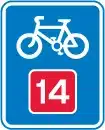
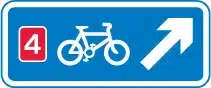
These are the helpful blue directional signs pointing cyclists toward local routes, towns or cycle networks. The national cycle network is a combination of interconnected cycle paths that span the length of the country that are often ideal for separating yourself from traffic.
They often tie into National Cycle Network routes and can help you discover quieter roads you wouldn’t normally think to use. Particularly useful if you’re trying to avoid stressful commuter roads.
Why These Signs Matter More Than You Think
Learning road signs for cyclists isn’t about passing a test. It’s about making riding easier and safer.
The more familiar these signs become, the less mental energy gets wasted trying to work things out in the moment and that matters far more than people realise.
Confidence on the bike often comes down to familiarity rather than bravery combined with the belief that you belong there. Understanding road signs for cyclists helps build exactly that and will make your cycle much more enjoyable.
Final Thoughts
Most road signs for cyclists are fairly logical once you understand them, but when you’re new to riding on UK roads, even simple things can feel less obvious than they should.
The good news is that this gets easier quickly. Once you know what the key road signs for cyclists mean, commuting becomes more predictable, route planning gets easier, and traffic feels slightly less chaotic.
And anything that makes the roads feel less stressful and more fun is generally worth knowing.
If this article was helpful. I’ve made an E-Book to help you in your first few weeks of cycle commuting. Just click the link below.
Any questions, get in touch using the contact page.
– Dan
Frequently Asked Questions About UK Cycle Signs
What does a blue cycle sign mean?
A blue cycle sign usually indicates a route or facility that cyclists should use, such as a cycle lane, cycle track or shared-use path.
What is the difference between a cycle lane and a cycle track?
A cycle lane forms part of the road and is marked with painted lines. A cycle track is physically separated from motor traffic and may run alongside the road or through parks and green spaces.
What do cycle path markings mean?
Cycle path markings help guide cyclists and other road users. They may indicate the direction of travel, designated cycling areas or shared-use sections with pedestrians.
Are cycle lanes mandatory to use in the UK?
All cycle lanes are advisory, meaning cyclists can choose whether to use them. Often cycle lanes if close to pedestrians have a speed limit of 15kph.
What does the bicycle symbol painted on the road mean?
A bicycle symbol on the road indicates a route intended for cyclists. It may mark a cycle lane, cycle route or an area where cyclists are expected to position themselves.
What are the most common road signs for cyclists?
The most common road signs for cyclists include cycle route signs, shared-use path signs, cycle lane signs, no cycling signs and advanced stop line markings at junctions.