


Intro
Whether you’re cycling to work, riding for fitness or simply getting back on the bike after a few years away, understanding the Highway Code Rules for Cyclists in the UK is one of the best ways to become a safer and more confident rider.
📋 Article Summary
🛣️ Topic: Highway Code for Cyclists
🚴 Best For: New cyclists and drivers looking to brush up on their Highway Code
📈 Difficulty: Beginner
🎯 You’ll Learn:
- Whether cyclists have to follow the Highway Code.
- The five most important Highway Code rules every cyclist should know.
- Why these rules exist and how they improve safety.
- Common mistakes new cyclists make.
- Practical tips from over ten years of everyday riding.
📍 Quick Answer
The Highway Code Rules for Cyclists in the UK helps you ride safely, predictably and confidently alongside other road users. By understanding a handful of key rules such as obeying traffic lights, using lights in poor visibility, riding in the correct road position and checking before changing direction you’ll make your rides safer and less stressful, whether you’re commuting, cycling for leisure or simply getting back on the bike.
Why Every Cyclist & Driver Should Know
Many people assume the Highway Code is written mainly for drivers, but it also contains important guidance for people riding bicycles. From road positioning and traffic lights to using lights and signalling clearly, these rules help everyone understand what to expect on the road.
The good news is you don’t need to memorise the entire bike Highway Code before your first ride. Learning a handful of key rules will make your journeys safer, more predictable and far less stressful.
Do Cyclists Have to Follow the Highway Code?
Yes. The Highway Code Rules apply to anyone riding on public roads, just as the Highway Code applies to drivers, motorcyclists and other road users.
One common misconception is that there’s a separate Highway Code for bicycles or a different set of rules for people riding bikes. There isn’t. Cyclists follow the same Highway Code as everyone else, with additional sections specifically written for people riding bicycles.
Some rules use words such as “should” or “should not”, which describe recommended best practice. Others use “MUST” or “MUST NOT”, meaning they’re supported by law and must be followed.
More importantly, the Highway Code helps every road user understand what others are likely to do. When everyone behaves predictably, the roads become safer, traffic flows more smoothly and misunderstandings are far less likely.
For cyclists, knowing the Highway Code also builds confidence. It helps you understand when it’s appropriate to take more of the lane, when to give way and how to make yourself visible to other road users.
🚴 Beginner Confidence
You don’t need to memorise the entire Highway Code before your first ride.
Focus on learning the rules you’ll use most often. As your confidence grows, these habits quickly become second nature, allowing you to spend less time worrying about the rules and more time enjoying the ride.
Rule 1 – Cyclists Must Follow Traffic Signs and Signals
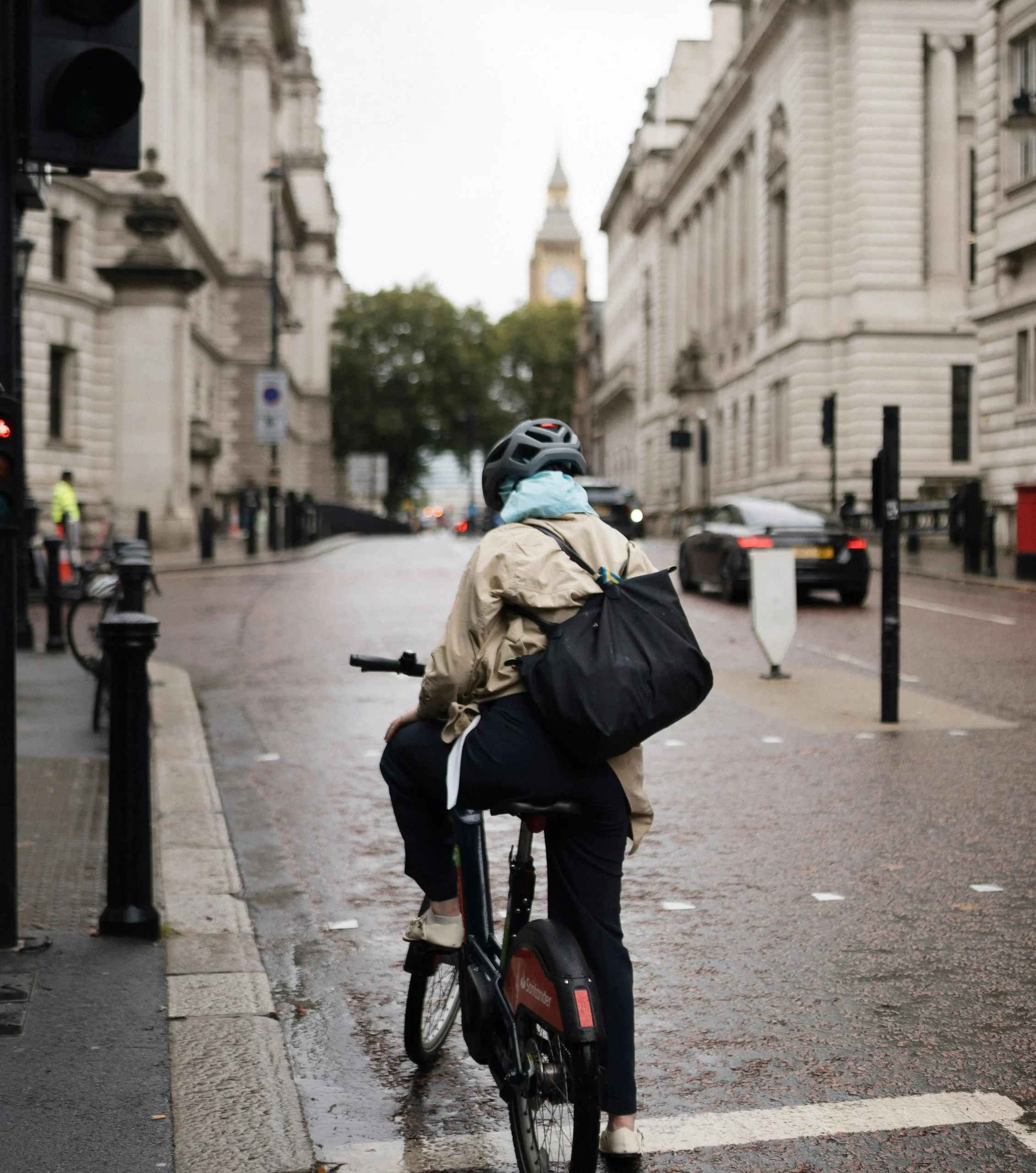
Now believe it or not, this is a controversial one. There are a minority of cyclists who will tell you traffic lights are for cars and not bikes. Now while it’s true traffic lights were infact created to control the traffic flow of cars it’s important you do obey them. Rule 71 of the
Highway Code rules for cyclists in the UK states:
Rule 71: “At traffic light junctions and at cycle-only crossings with traffic lights, you MUST NOT cross the stop line when the traffic lights are red.”
You’ll occasionally see cyclists ride through red lights, particularly when a junction appears quiet or there’s little traffic around. While a bicycle doesn’t present the same level of danger to others as a car, that doesn’t mean the rule should be ignored.
Traffic lights exist to make junctions predictable. Every road user, whether they’re driving, walking, or cycling expects others to stop when the signal is red. That predictability reduces confusion, helps traffic flow safely and lowers the risk of collisions.
⚠️ Avoid This Mistake: Don’t assume that because a junction looks quiet it’s safe to ride through a red light.
Ignoring a red light might save a few seconds, but in reality you’ll often find the traffic catches up with you further down the road anyway. The small amount of time gained is rarely worth increasing the risk of a collision or creating unnecessary frustration with other road users.
More importantly, following traffic signals helps improve the relationship between cyclists and drivers. One of the biggest misconceptions is that cyclists don’t follow the Highway Code, and while a minority of riders do ignore the rules, the vast majority simply want to travel safely and get where they’re going. Riding predictably helps reinforce that message and makes the roads a calmer place for everyone.
💡 Slow Lane Tip: It’s easy to focus on what other cyclists are doing, especially if you see someone ride through a red light. Ride your own ride!
Rule 2 – Use Lights When Visibility Is Poor
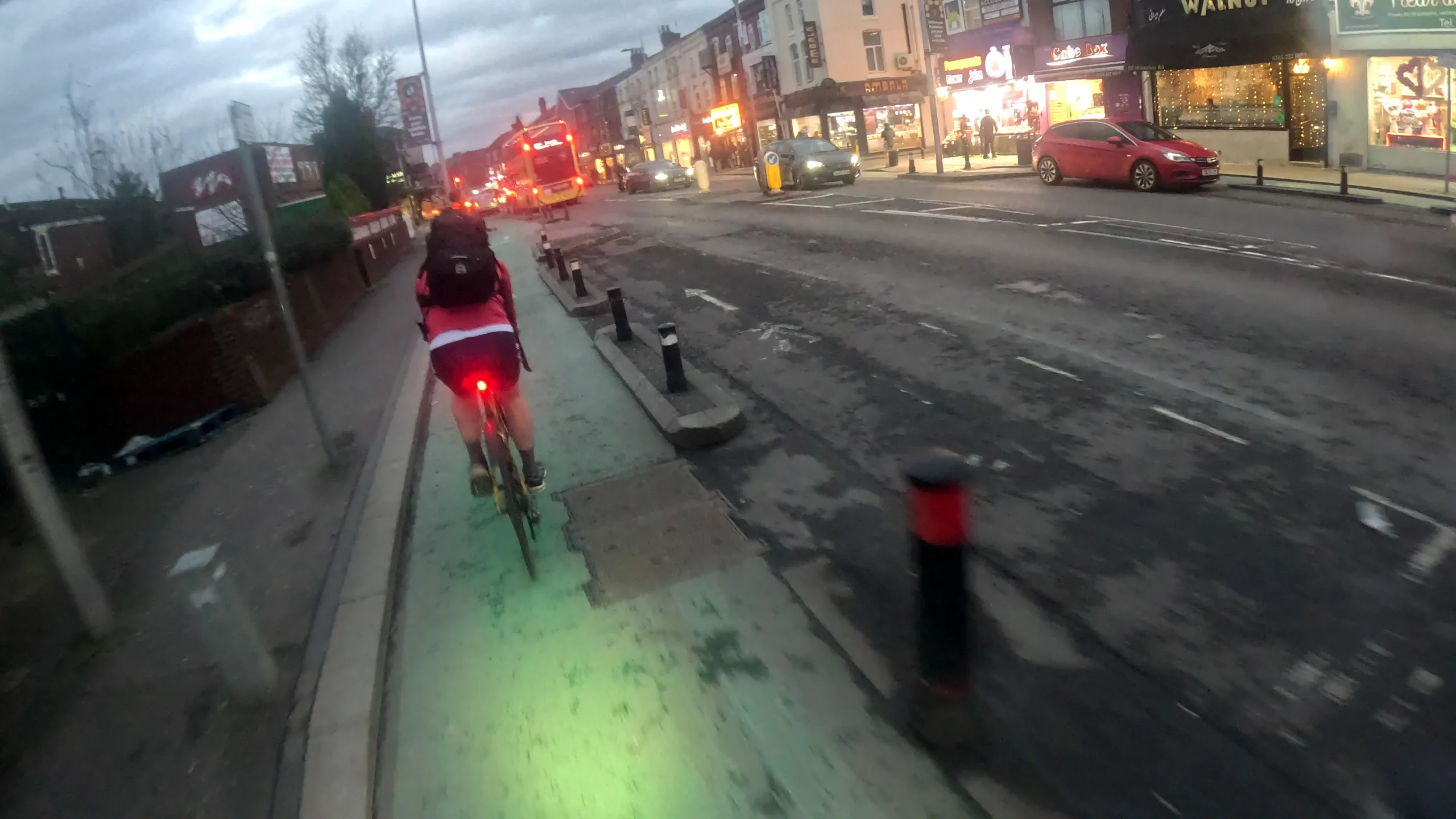
One of the most important Highway Code Rules for Cyclists in the UK is using the correct lights when riding in poor visibility or after dark. Good lighting gives drivers, pedestrians and other cyclists more time to recognise you and react appropriately.
💡 Slow Lane Tip: I ride with lights every time I’m on the bike, regardless of the weather or time of day.
The Highway Code states:
Rule 60: “At night your cycle MUST have white front and red rear lights lit. It MUST also be fitted with a red rear reflector (and amber pedal reflectors, if manufactured after 1/10/85).”
This is a legal requirement when riding between sunset and sunrise, but good visibility isn’t just important at night.
Rain, fog, heavy cloud and low winter sun can all make it much harder for drivers to spot cyclists, even during the middle of the day. Using lights in these conditions helps you stand out against the background and makes it easier for others to judge your speed and position.
⚠️ Avoid This Mistake: Don’t wait until it’s dark before turning your lights on. If the weather changes, rain starts falling or visibility becomes poor, switch your lights on early.
Also remember that brighter isn’t always better. A powerful front light aimed too high can dazzle oncoming cars and bikes.
Many experienced cyclists, myself included, choose to use lights all year round. Modern rechargeable lights are lightweight, reliable and offer long battery life, making them an easy habit to build into every ride.
🔦Slow Lane Recommended Gear
I’ve personally used LenzEye lights for years. They offer a wide range of brightness levels, battery capacities and sizes, making it easy to find something that suits everything from short commutes to longer rides.
Rule 3 – Ride in a Predictable Position on the Road
One of the highway code rules for cyclists UK riders often misunderstand is road positioning. Many beginners think they should stay as close to the curb as possible, but the Highway Code actually advises riding in a position where you can be seen clearly.
The temptation it to ride closely to the curb so you are “less in the way” of traffic”. It’s a beginner trap and can give you a world of problems. Best case scenario riding close to the curbs allows drivers to think they may have enough room to get past, this can leave you squeezed against the curb with no where go. Worst case scenario you could end up being too close to a car as a door swings open and end up with some serious injuries.
⚠️ Avoid This Mistake: Don’t hug the kerb because you think you’re helping traffic.
It might feel like you’re making it easier for drivers to pass, but you’re often doing the opposite. Riding too close to the edge can encourage unsafe overtakes and leaves you with nowhere to go if you need to avoid an obstacle.
Rule 72 of the Highway Code rules for cyclists in the UK states:
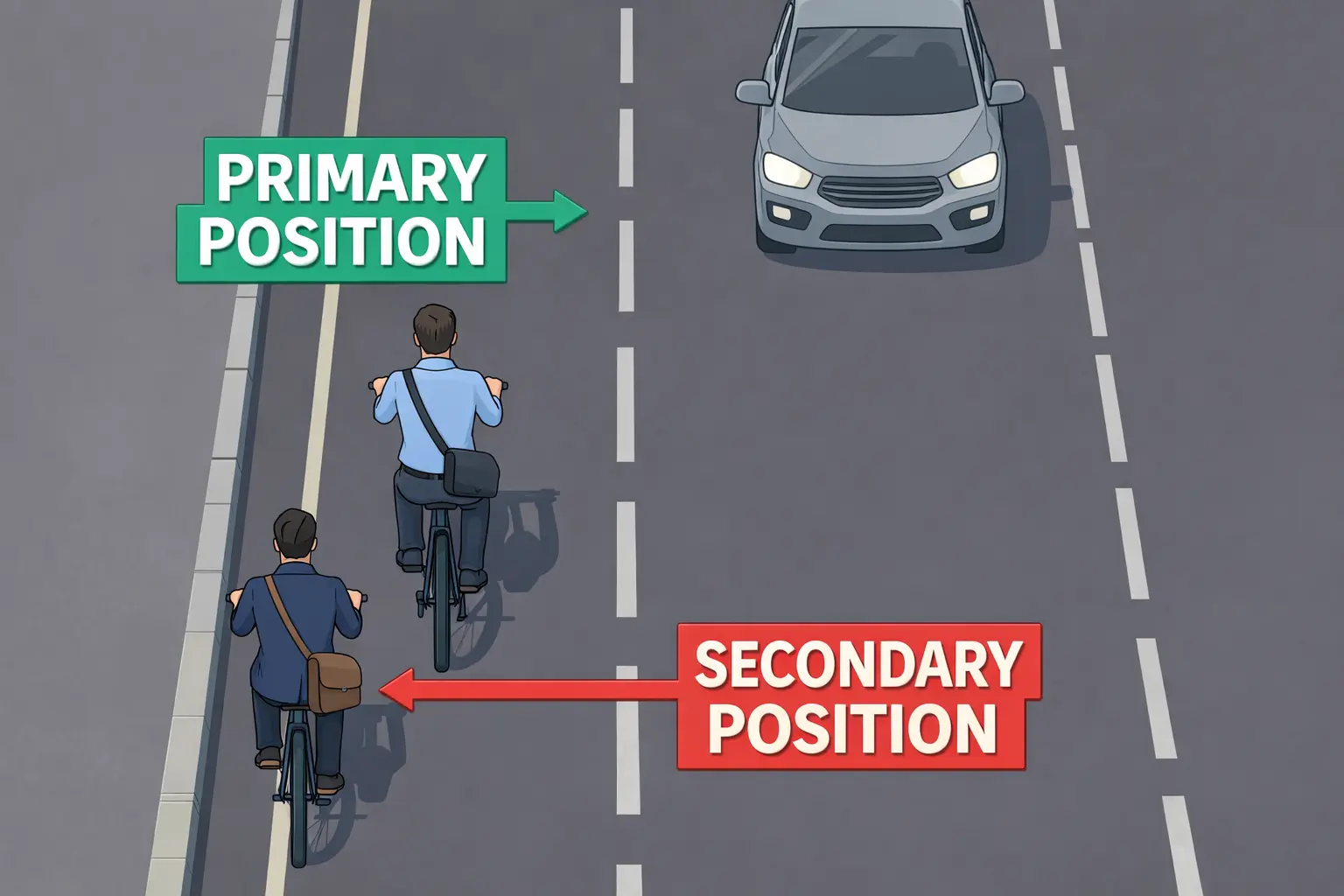
Rule 72: “Road positioning. When riding on the roads, there are two basic road positions you should adopt, depending on the situation..”
These are commonly known as the primary position and the secondary position.
The secondary position is generally used on quieter roads or when drivers can safely overtake, allowing you to ride slightly away from the edge of the road while still leaving plenty of room for passing traffic.
The primary position means riding further into the lane. It should be used whenever it’s unsafe for a vehicle to overtake, such as when approaching parked cars, narrow roads, blind bends, traffic islands or junctions.
Rather than trying to keep out of everyone’s way, good road positioning makes your intentions clear and encourages drivers to wait until it’s genuinely safe to pass.
Many beginners naturally drift towards the kerb because they feel they’re being considerate to drivers. Unfortunately, this often has the opposite effect.
💡 Slow Lane Tip: Move into your road position before you reach the hazard.
As a general rule, try to leave at least a door’s width between yourself and parked vehicles. If someone suddenly opens a car door, you’ll have space to avoid it safely.
Riding too close to the edge can encourage drivers to attempt unsafe overtakes without changing lane properly. It also leaves you with very little room to avoid potholes, drain covers or other hazards.
Instead, position yourself where you’re clearly visible and where drivers understand they’ll need to perform a proper overtake when it’s safe to do so.
Why Drivers Should Leave 1.5 Metres
One piece of guidance that’s often misunderstood is the recommendation for drivers to leave at least 1.5 metres when overtaking cyclists at speeds of up to 30 mph.
Some people assume this means cyclists should ride as close to the kerb as possible to make overtaking easier. In reality, the recommendation exists because the greater danger comes from the passing vehicle and not the cyclist.
By riding in a clear, predictable position, you’re helping drivers recognise when they need to move fully into the next lane to overtake safely, rather than attempting to squeeze past within the same lane.
When both cyclists and drivers understand this, overtaking becomes much safer for everyone.
Rule 4 – Do Not Ride on the Pavement

Another key highway code rule for cyclists UK beginners should know is that riding on the pavement is not normally allowed unless it is marked as a shared cycle path. Some pavements have a seperate cycling and pedestrian side, and also canal paths are allowed.
💡 Slow Lane Tip: Choose the quieter route, not the easier-looking one.
A residential street that’s a minute longer is often far safer and much more enjoyable than riding on a busy main road or weaving between the road and pavement.
This rule catches a lot of new riders out, especially when traffic feels intimidating. It can be tempting to move onto the pavement to avoid busy roads, but in most places this is not permitted unless you get off and push your bike.
Rule 64 of the Highway Code rules for cyclists in the UK states:
Rule 64: You MUST NOT cycle on a pavement.
Unless a pavement has been clearly marked as a shared-use path, cycling on it isn’t permitted. Shared paths are usually identified with signs or road markings showing they can be used by both pedestrians and cyclists.
It’s easy to understand why some beginners choose the pavement, especially when faced with busy roads or fast-moving traffic. However, pavements aren’t designed for cycling. Pedestrians aren’t expecting bicycles travelling at speed, drivers leaving driveways often don’t look for cyclists on the pavement, and you’ll usually have to keep stopping to cross side roads or rejoin the carriageway.
⚠️ Avoid This Mistake: Don’t swap between the road and pavement.
It might feel safer, but it creates new hazards at driveways, side roads and pedestrian crossings. If a road feels intimidating, look for a quieter alternative instead.
If a particular road feels intimidating, it’s usually better to plan a quieter route than to switch between the road and pavement. Residential streets, cycle routes and roads with lower speed limits often provide a much more enjoyable riding experience while helping you build confidence over time.
Filter Carefully and Only When It’s Safe
Filtering is when a cyclist moves past slow-moving or stationary traffic. It can be a useful way to make progress through congestion, but it also requires good judgement.
The Highway Code advises cyclists to filter with care and to watch out for hazards such as vehicles changing direction, opening doors and pedestrians crossing between traffic.
💡 Slow Lane Tip: If you’re unsure, don’t filter.
Waiting behind traffic for a few seconds is far better than putting yourself in a position where a driver isn’t expecting you.
Before deciding to filter, always ask yourself whether drivers are expecting you to be there. If the answer is no, it’s usually better to wait.
If traffic is moving steadily, there’s often little to gain by filtering. Instead, hold your road position and continue with the flow of traffic. Filtering is most appropriate when vehicles are stationary or moving very slowly.
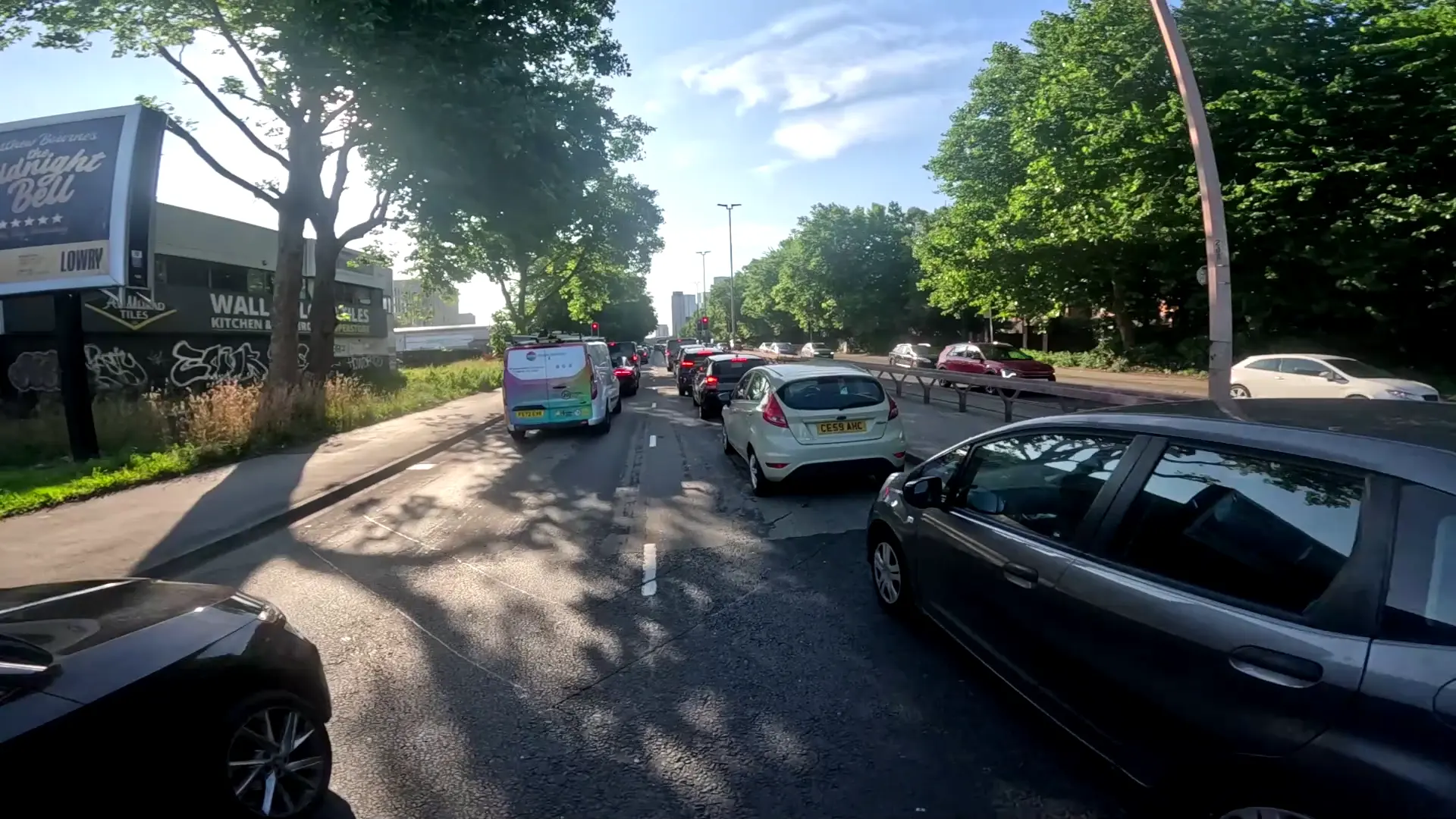
One of the biggest risks comes at junctions. A driver may decide to turn left without noticing a cyclist approaching on the inside, particularly if they’re focused on oncoming traffic or pedestrians.
For this reason, it’s important to slow down, cover your brakes and be prepared for vehicles to change direction unexpectedly.
Large vehicles deserve even more caution. HGVs and buses have significant blind spots, making it difficult for drivers to see cyclists riding alongside them.
If you find yourself beside a turning HGV or bus, the safest option is to drop back and let the vehicle complete its manoeuvre.
⚠️ Avoid This Mistake: Never overtake a turning bus or HGV on the left.
Their blind spots are much larger than most people realise, and it’s one of the most dangerous situations a cyclist can encounter.
Rule 5 – Always Check Before Turning or Changing Position
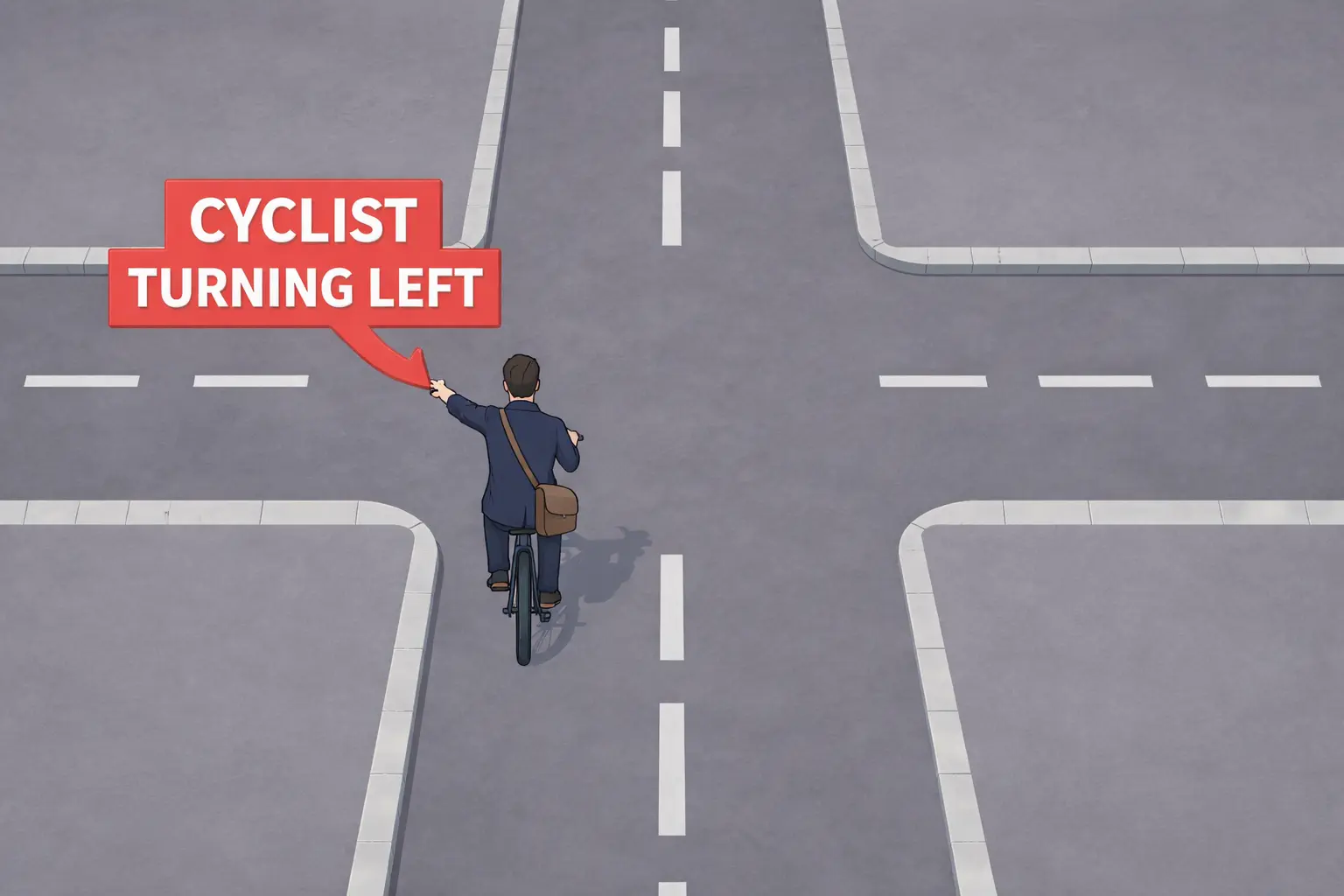
Whether you’re turning at a junction, moving around a parked car or changing road position, always check what’s happening behind you before making your move.
A simple arm out can make your intentions clear, and when combined with road positioning it’s the best way you can state your intentions clearly.
💡 Slow Lane Tip: Look before you move. Every time.
A quick shoulder check before changing position soon becomes second nature and is one of the best habits you can develop.
Rule 74 of the Highway Code rules for cyclists in the UK states:
Rule 74: “When approaching a junction on the left, watch out for vehicles turning in front of you, out of or into the side road. If you intend to turn left, check first for other cyclists or motorcyclists before signalling.”
Before changing direction, get into the habit of following a simple routine:
- Check behind with a shoulder check.
- Signal if it’s safe and appropriate to do so.
- Check again if needed.
- Move smoothly into your new position.
A quick shoulder check can make all the difference. It helps you spot cyclists, motorcyclists and vehicles that may not be visible in your mirrors, or if you don’t use mirrors, simply outside your normal field of vision.
Many new cyclists focus so much on what’s happening ahead that they forget to check behind before moving across the road. With practice, shoulder checks become second nature and help you make confident, predictable decisions.
⚠️ Avoid This Mistake: Don’t rely on your signal alone.
Signalling tells others what you plan to do, it doesn’t mean it’s safe to move. Always check behind before changing direction or road position.
Remember that signalling doesn’t automatically give you priority. Its purpose is to let other road users know what you intend to do, allowing everyone to react safely.
Building Confidence on the Road

Learning the Highway Code for bikes isn’t just about staying on the right side of the law; it’s about becoming a more confident rider.
When you understand why the rules exist, you spend less time second-guessing yourself and more time focusing on the road ahead. Whether you’re approaching a junction, choosing your road position or deciding whether it’s safe to filter, you’ll be making informed decisions rather than reacting in the moment.
The Highway Code also gives you confidence to ride assertively when you need to. There may be occasions when a driver expects you to move closer to the kerb or tries to pressure you into making space where it isn’t safe to do so. Understanding the rules helps you recognise when it’s appropriate to hold your position and wait for a safe opportunity for them to overtake.
Above all, remember that good cycling isn’t about riding aggressively or timidly. It’s about being predictable. When other road users can understand what you’re doing, everyone has more time to react, making the roads safer for cyclists, drivers and pedestrians alike.
Final Thoughts
Most of the Highway Code rules for cyclists are common sense, but that doesn’t mean you shouldn’t review them before you start on your cycling journey. Following signals, using lights, riding predictably, staying off pavements where required, and checking before moving are simple habits that make riding safer and more enjoyable.
Start by building a few simple habits: obey traffic lights, use lights when visibility is poor, choose the correct road position, filter with care and always check behind before changing direction. As you gain experience, these habits will become second nature.
If this article was helpful, I’ve made an E-Book to help you in your first few weeks of cycle commuting. Just click the link below.
Any questions, get in touch using the contact page.
– Dan
FAQ: Common questions about changing the Highway Code
Do cyclists have to follow the Highway Code in the UK?
Yes. Cyclists must follow the Highway Code when riding on public roads. Some rules are advisory, while others are legal requirements identified by the words “MUST” or “MUST NOT”. Following the Highway Code helps make your riding more predictable and improves safety for everyone using the road.
Can cyclists ride two abreast?
Yes. The Highway Code states that cyclists can ride two abreast and suggests it can be safer in some situations, such as when riding in larger groups or accompanying children. However, it’s good practice to ride single file on narrow or busy roads if it’s safe to do so and allows traffic to pass more easily.
Is it illegal to cycle on the pavement?
In most cases, yes. Cycling on the pavement is not permitted unless it has been designated as a shared-use path. If a road feels intimidating, it’s usually better to choose a quieter route than to move between the road and the pavement.
Do cyclists have to wear a helmet?
No. There is currently no legal requirement to wear a cycle helmet in the UK. However, the Highway Code recommends wearing a correctly fitted helmet that meets current safety standards. Many cyclists choose to wear one as an extra layer of protection. However it is often pointed out that drivers are much more at risk of head injuries than cyclists. So if you are a driver asking this question, then you should strap one on too.
Do cyclists have to use cycle lanes?
No. Cycle lanes are provided to help cyclists, but they are not compulsory in most situations. If a cycle lane is obstructed, poorly maintained or doesn’t feel safe, you can remain on the road and choose the position that best suits the conditions.
Can cyclists filter through traffic?
Yes, when it is safe to do so. Filtering can help cyclists move through stationary or slow-moving traffic, but it should always be done with care. Be especially cautious around junctions and never overtake a turning bus or HGV on the left.
Why do cyclists ride away from the kerb?
Cyclists often ride further into the lane to improve visibility, avoid potholes and drain covers, stay clear of the door zone of parked cars and discourage unsafe overtakes. Riding away from the kerb is often the safest and most predictable position, not an attempt to hold up traffic.
Where can I learn more about the Highway Code?
The official Highway Code is available free online and is regularly updated. It’s worth reviewing from time to time, even if you’ve been cycling or driving for years, as rules and guidance can change.
Related Guides
- How to Start Cycling to Work: A Beginner’s Guide
- Primary vs Secondary Road Position Explained
- Essential Bike Tools Every Cyclist Should Carry
- Cycling Through Red Lights: Is It Ever Legal?
- How to Plan a Safer Cycling Route
- How to Fix a Bike Puncture
- Cycling in the Rain: 7 Easy Tips for Staying Comfortable
References
- Highway Code (Rules for Cyclists)
- Cyclecraft by John Franklin – Widely regarded as one of the best books on confident road cycling and the principles behind modern cycle training.
- Bikeability – National cycle training available across the UK for children and adults wanting to improve their cycling skills.