


Introduction
When you first get out on the road, you can be overwhlemed by the experiance, even if you have driven a car your whole live. It’s almost like learning to drive again. This guide will help you navigate your new world and stay safe on the UK roads. It’s worth noting cycle lanes are never mandatory for cyclist to use, if the road feels more safe then stick to that.
📋 Article Summary
🛣️ Topic: UK Cycle Lanes, Signs & Road Markings
🚴 Best For: New Cyclists & Cycle Commuters
🎯 You’ll Learn:
📈 Difficulty: Beginner
- Different UK cycle lane types
- Common cycle signs
- Road markings for cyclists
- Bus lane rules
- National Cycle Network signs
📍 Quick Answer
Cycle lanes, signs and road markings are designed to improve safety and guide cyclists around the UK road network. The most common features include advisory and mandatory cycle lanes, segregated cycle tracks, shared-use paths, contraflow cycle lanes, advanced stop lines and National Cycle Network signs. Understanding what they mean will help you ride more safely and confidently.
What Are Cycle Lanes?
Cycling on UK roads can feel intimidating at first. Unlike drivers, cyclists have very little protection, which is why well-designed cycle infrastructure plays such an important role in making roads safer and more accessible.
Cycle lanes are designed to create dedicated space for cyclists, reducing conflict with faster-moving traffic and making it easier for people of all ages and abilities to travel by bike. However, not all cycle lanes offer the same level of protection. Some are simply painted onto the road, while others provide physical separation from traffic using kerbs or barriers.
As you’ll discover throughout this guide, understanding the different types of cycle lanes, signs and road markings will help you ride more confidently and make better decisions when you’re out on the road.
Cycle infrastructure doesn’t just benefit cyclists either. Encouraging more people to choose active travel helps reduce congestion, improve public health and lower emissions. According to the Department for Transport, every £1 invested in active travel generates around £6 in economic benefits through improved health, reduced congestion and wider economic gains. Department for Transport (2014)
One important thing to remember: in most situations, cyclists are not legally required to use a cycle lane. If a lane is blocked, poorly maintained or doesn’t feel like the safest option, you can usually remain on the main carriageway instead.
Types of UK Cycle Lanes
Advisory Cycle Lane
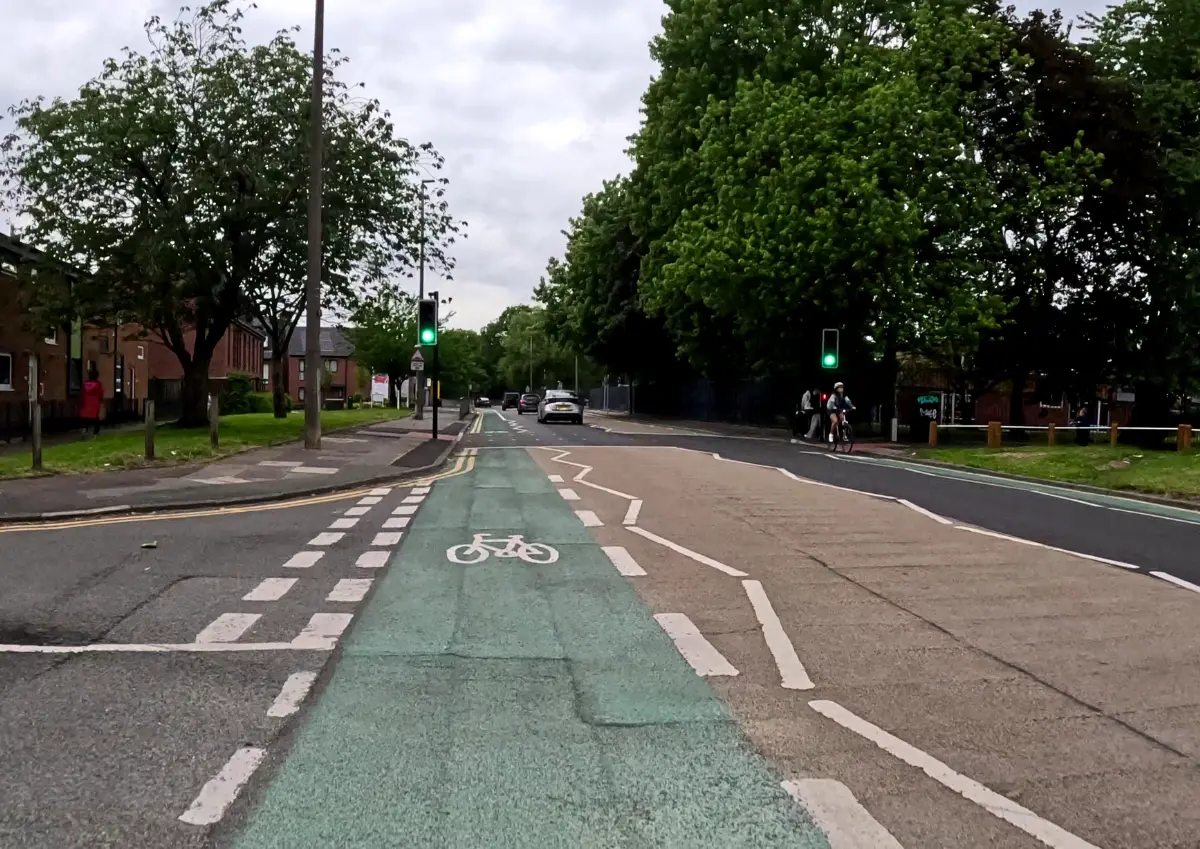
An advisory cycle lane is the simplest type of cycle lane and is normally marked by a broken white line with a bicycle symbol painted on the road. These are generally found on quieter roads and on the outskirts of towns and cities, where the cost of installing a fully segregated cycle lane isn’t justified.
Cars are allowed to enter advisory cycle lanes when necessary, so always be alert for vehicles moving into the lane to pass parked cars or turn into side roads. Never assume drivers will stay out of the lane simply because it has a bicycle symbol painted on it.
One of the most common hazards is parked cars. Always leave at least a door’s width when passing them to avoid being “doored” if someone suddenly opens their car door into your path. It happens more often than you’d think and is one of the easiest accidents to avoid by giving yourself a little extra space.
You should also watch for vehicles pulling out from side roads, driveways or gaps between parked cars. Make eye contact with drivers where possible and always leave yourself enough room and time to react if someone hasn’t seen you.
Advisory cycle lanes should be used where they help, but don’t feel obliged to stay in one if it becomes blocked or unsafe. When filtering through slow-moving traffic, it’s often safer to pass on the outside (right-hand side) of vehicles where you’re more visible to drivers, rather than squeezing up the inside where you’re far more likely to end up in a blind spot.
💡 Slow Lane Tip: Treat an advisory cycle lane as extra road space rather than a protective barrier. Stay visible, give yourself room to manoeuvre and don’t be afraid to leave the lane if it’s the safer option.
Mandatory Cycle Lane
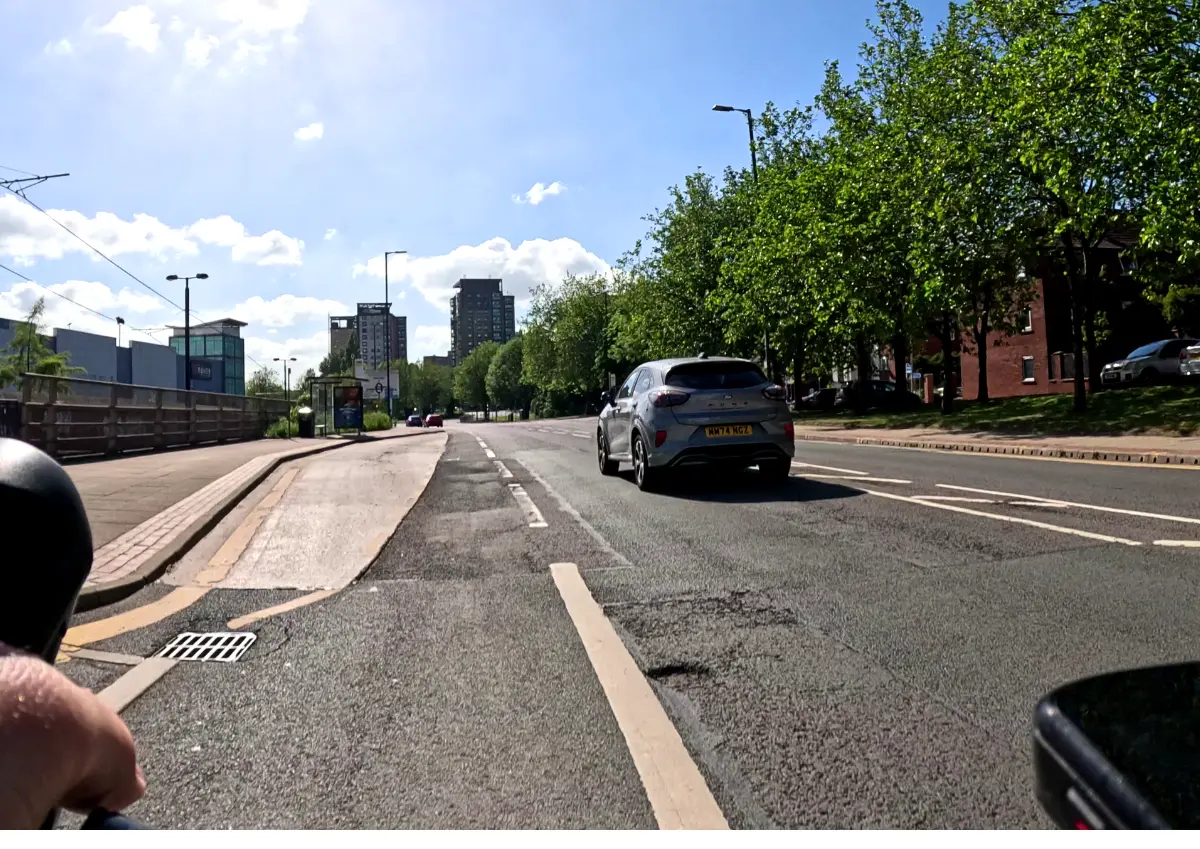
A mandatory cycle lane looks much like an advisory lane, except it’s marked with a solid white line instead of a broken one. During its hours of operation, other vehicles should not drive or park in the lane, creating a safer space for cyclists.
Unfortunately, anyone who cycles regularly will know that’s not always the reality. Poor enforcement means many mandatory cycle lanes still end up blocked by parked vehicles, forcing cyclists back into the flow of traffic.
Many of the same hazards as advisory lanes still apply. Watch out for road debris, vehicles turning across your path and pedestrians stepping into the lane unexpectedly.
If you need to overtake a parked vehicle, check over your shoulder, signal if necessary and move out early. Always leave at least a door’s width when passing parked cars to reduce the risk of being “doored” if someone opens a door into your path.
💡 Slow Lane Tip: A solid white line offers more protection than a broken one, but never assume drivers will always respect the lane. Stay alert and always put your safety first.
Segregated Cycle Lane
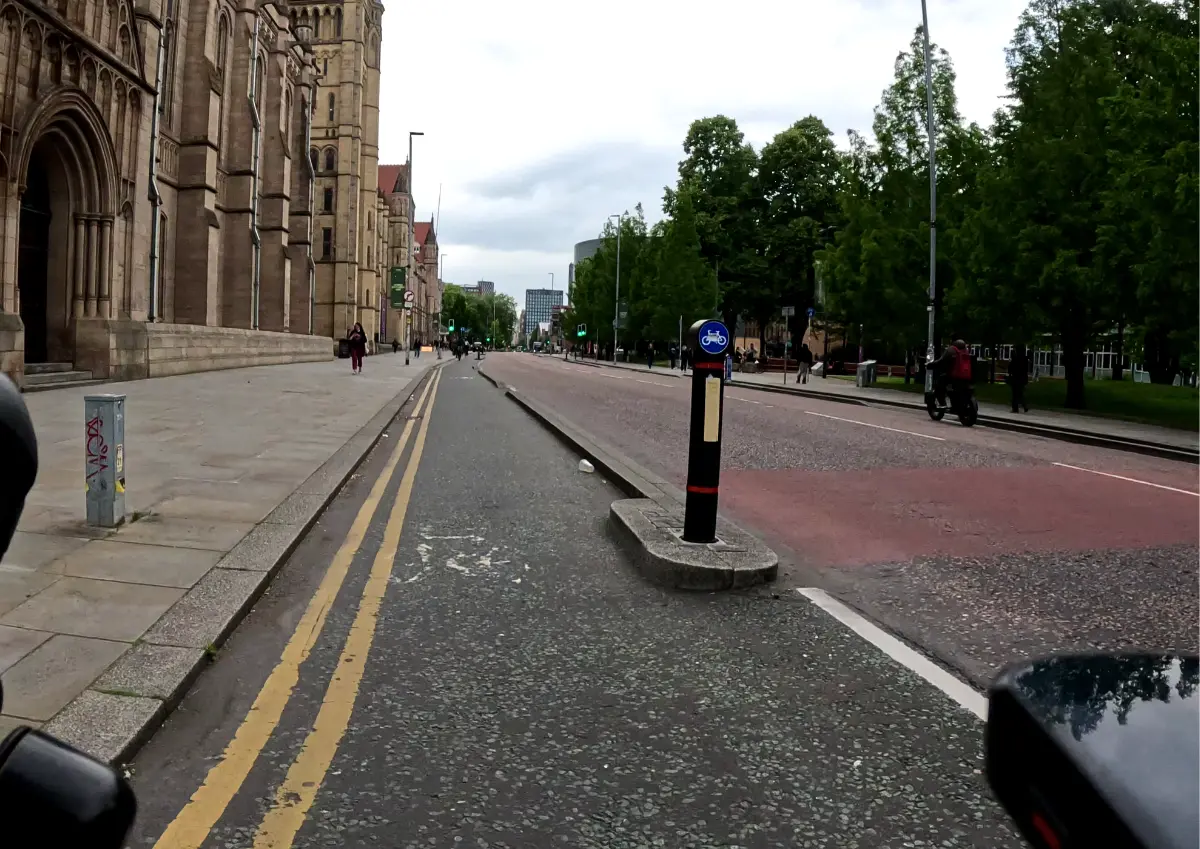
Segregated Cycle Lane
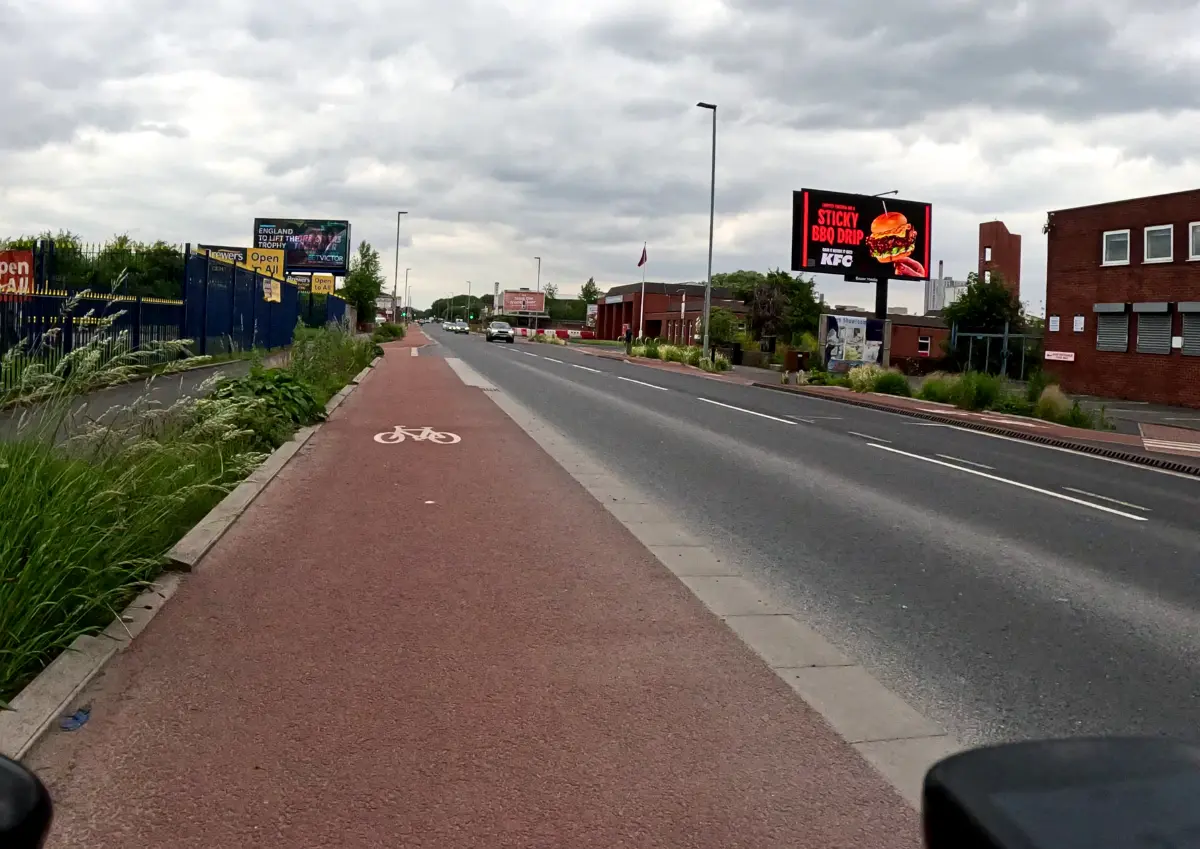
Elevated Cycle lane
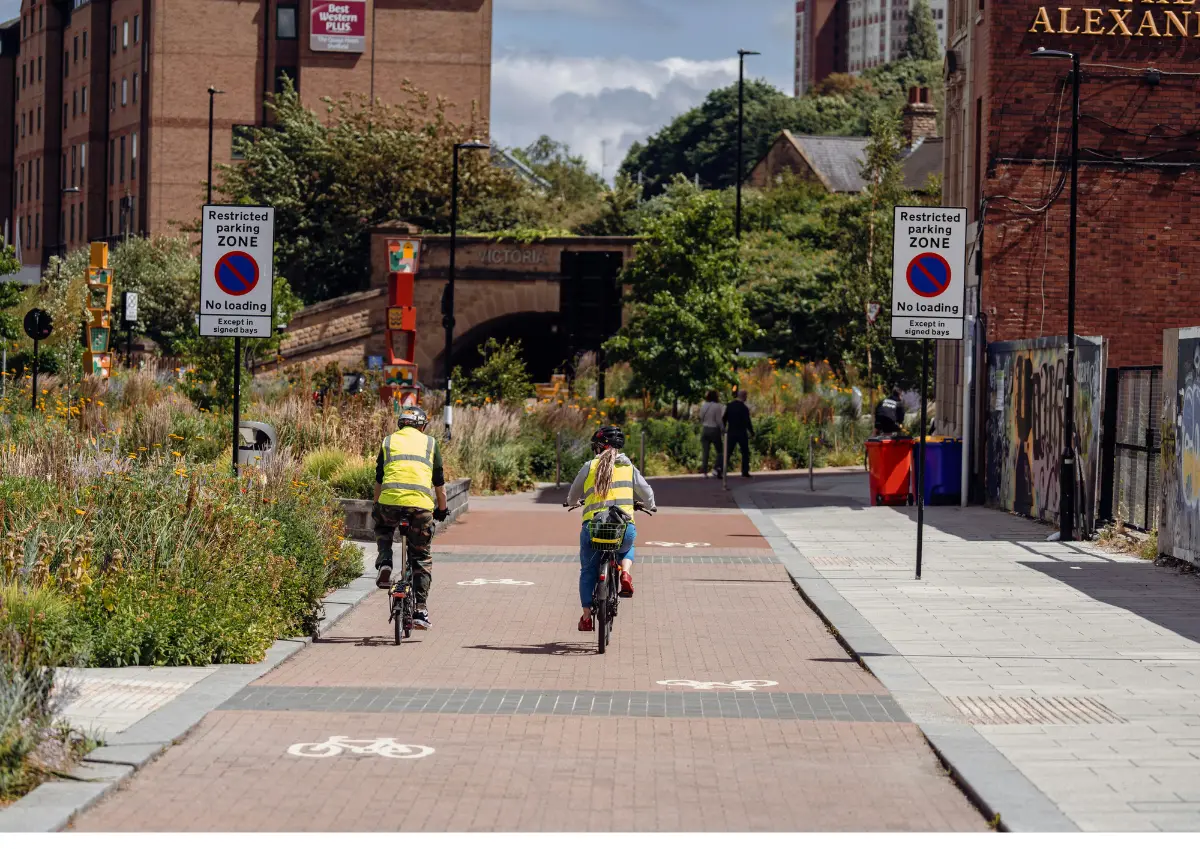
Now we are getting into the gold standard of cycle infrstructure, these segregated lanes will have a physical barrier between the moving traffic and the lanes removing any chance of cars straying into them or them coming victim to inconsiderate parking.
They have a speed limit of 15kph and you should always be aware of pedestrians, many of these lanes pass behind bus stops or near other pedestrian walkways which can lead to unintended collisions.
They are often found in inter cities and as such will make up a large part of your commute if that is where you are heading. The physical barrier can come in multiple forms, above we have a physcially segreagted with kurbs and also a raised cycle lane that is again protected by the raised kurb.
An additional watch out for both of these is junctions, as they are where a large amount of the accidents happen. Always be aware of cars turning left in front of your path. The new Highway Code updates of 2025 give you theoretical right of way but don’t protect you from drivers who are not paying attention.
Now we’re getting into the gold standard of cycling infrastructure. Segregated cycle lanes provide a physical barrier between cyclists and moving traffic, making them one of the safest and most comfortable places to ride. They also prevent cars from straying into the lane or using it for inconsiderate parking, which is a common problem with painted cycle lanes.
Segregated lanes are most commonly found in towns and city centres, where they often form the backbone of cycle commuting routes. The barrier can take several forms, from raised kerbs and islands to fully elevated cycle tracks, all designed to give cyclists their own dedicated space.
While these lanes remove many of the hazards associated with riding alongside traffic, they aren’t completely risk-free. Be aware of pedestrians stepping into the lane, particularly near bus stops, crossings and shared spaces where people may not realise they’re walking into a cycle route.
The biggest danger is still at junctions. This is where many cycling collisions occur, so always watch for vehicles turning left across your path. Although the Highway Code gives cyclists priority in some situations, never assume a driver has seen you. A moment of caution at a junction is far better than relying on having the right of way.
➡️ Related Guide: Highway Code Changes 2025
💡 Slow Lane Tip: Treat every junction as a potential hazard. Even on the best cycle infrastructure, making eye contact with drivers and slowing down slightly can prevent a serious collision.
Shared Use Path
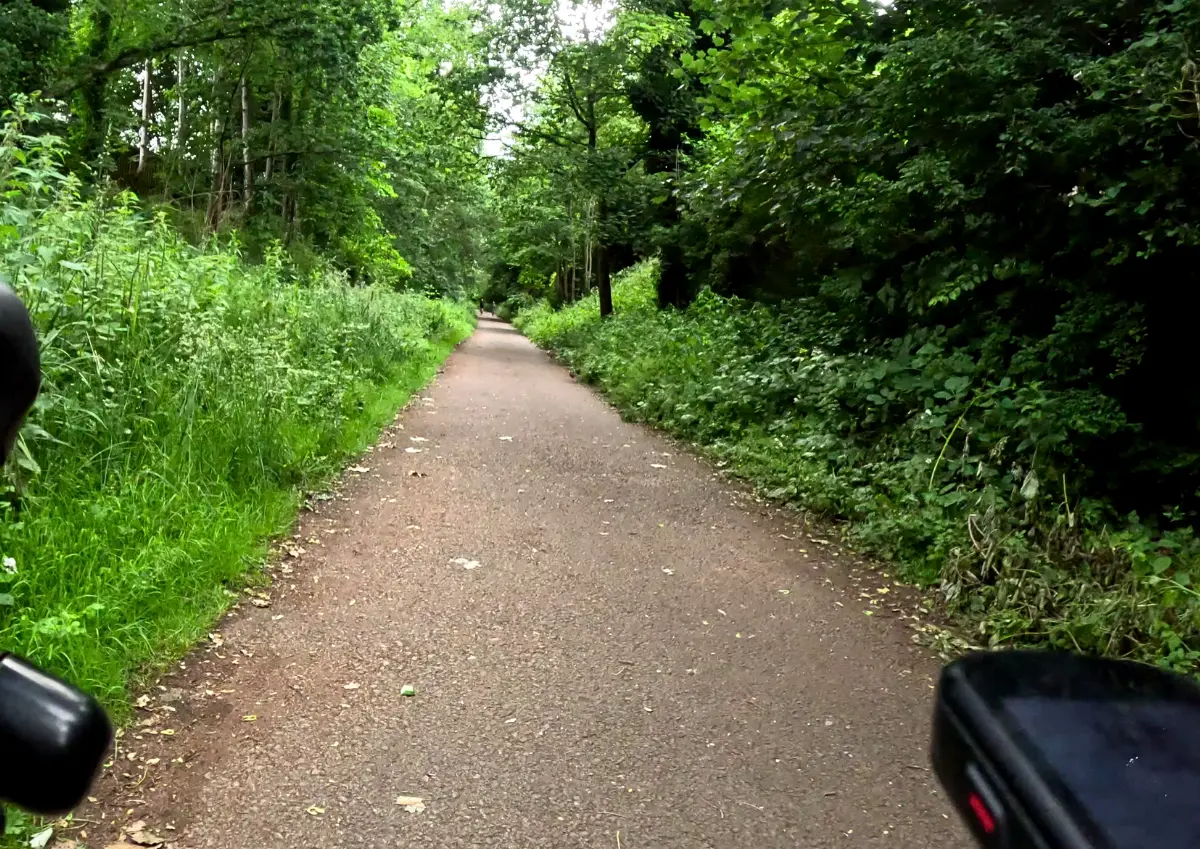
If you can find shared-use paths near you, they’re a fantastic way to build confidence and ease yourself into cycle commuting. By taking motor traffic out of the equation, they let you focus on handling your bike, improving your awareness and simply enjoying the ride.
As the name suggests, these paths are shared with pedestrians and sometimes other wheeled users, so it’s important to ride considerately. Keep your speed sensible, be prepared for people changing direction unexpectedly and always give pedestrians plenty of space when overtaking.
One thing to watch out for is winter conditions. Many shared-use paths aren’t gritted or cleared as quickly as the road network, and they can become slippery with ice, wet leaves or mud. They also tend to be less well lit than roads, so a good set of front and rear lights is essential if you’re riding during the darker autumn and winter months.
💡 Slow Lane Tip: A shared-use path isn’t a race track. Slow down around pedestrians, use your bell politely if you have one, and always be prepared to stop if someone steps into your path.
Bike Boxes
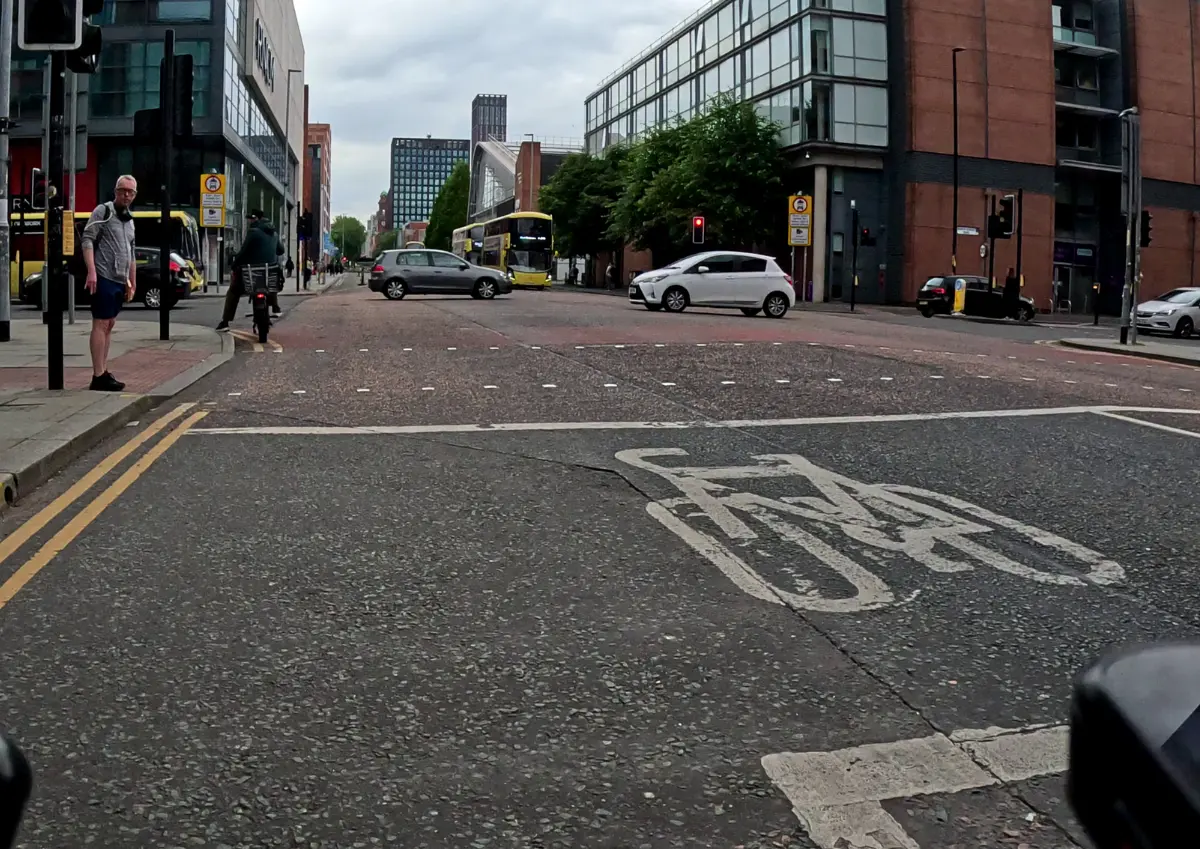
Bike boxes, also known as Advanced Stop Lines (ASLs), are one of the simplest pieces of cycling infrastructure to use, yet many new cyclists don’t take full advantage of them. They provide a dedicated waiting area in front of queuing traffic, making you much more visible to drivers, particularly those in buses and HGVs where blind spots are much larger.
By positioning yourself ahead of the queue, you’re easier to see when the lights change and have more room to move away safely before traffic catches up. If you can reach the bike box safely before the lights turn red, don’t be afraid to use it—it gives you a safer, more confident position through one of the busiest parts of your journey.
However, don’t weave through moving traffic just to reach the bike box. If the lights have already changed or you can’t get there safely, simply wait in a visible position behind the traffic and continue through the junction when it’s safe to do so.
💡 Slow Lane Tip: Bike boxes are designed to improve your visibility, not save a few seconds. Use them whenever you can reach them safely, but never put yourself at risk trying to get there.
UK Cycle Signs Explained
As well as understanding the different types of cycle lanes, it’s important to recognise the signs that go with them. These tell you where cycling is encouraged, where it’s prohibited and how different types of cycling infrastructure should be used.
The two most common signs you’ll come across are the blue circular cycle sign, which indicates a cycle route or cycle path, and the red and white “No Cycling” sign, which means cycling is not permitted beyond that point. Knowing the difference will help you stay safe and avoid accidentally riding where you shouldn’t.
There are plenty of other cycle signs used on UK roads, including shared-use path signs, National Cycle Network signs and cycle route markers. Rather than cover them all here, I’ve put together a complete guide to UK cycle signs explaining what each one means and where you’re likely to encounter it.
➡️ Related Guide: Road Signs for Cyclists in the UK
💡 Slow Lane Tip: If you’re ever unsure what a sign means, slow down and take a moment to work it out. A few seconds of caution is always better than ending up somewhere you shouldn’t be.
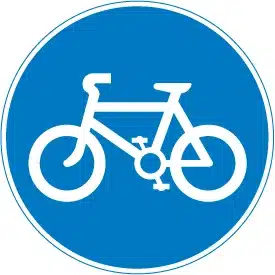
Cycle lane sign
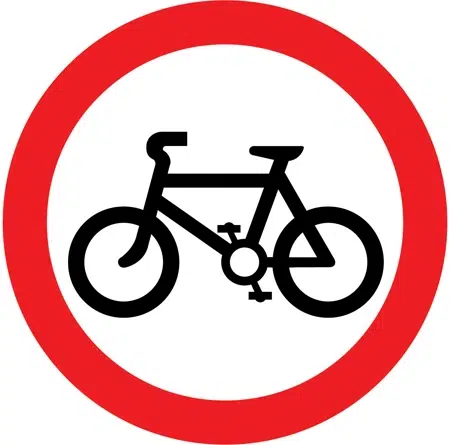
Cycling prohibited sign
Using Cycle Lanes Safely
Understanding cycle lanes is only half the battle. Knowing how to use them safely and confidently will make your commute far more enjoyable and help you avoid many of the common hazards that catch out new cyclists.
Road Positioning
Good road positioning is one of the most important skills you can learn as a cyclist. Your position should always balance visibility, safety and comfort.
As you approach a junction, avoid riding up the inside of traffic, particularly if you see a vehicle indicating left. Even if they’re not indicating you should never assume a driver has seen you. A much safer approach is to position yourself behind one car but in front of the next, allowing you to cross the junction while remaining visible and out of any blind spots. If you’re a more confident rider and the road conditions allow, taking the centre of the lane through the junction can also discourage unsafe overtakes.
Stay Out of the Gutter
One of the biggest mistakes new cyclists make is riding too close to the kerb. Although it might feel like you’re giving drivers more room, it often encourages close passes and leaves you with nowhere to go if you need to avoid a pothole or drain cover.
Riding a little further out also gives you more time to react to hazards such as parked cars, road debris and pedestrians stepping into the road. Don’t be afraid to claim the space you need to ride safely.
Stay Alert
Even the best cycle infrastructure can’t remove every hazard. Pedestrians, particularly around bus stops and shared-use paths, can step into your path unexpectedly, often while distracted by their phones or wearing headphones.
Ride at a speed that allows you to react to what’s happening around you, especially in busy areas. It’s far better to arrive a few seconds later than risk a collision that could damage your bike or cause an unnecessary injury.
💡 Slow Lane Tip: Always look as far ahead as possible. Spotting hazards early gives you more time to adjust your position smoothly instead of making sudden movements at the last second.The key to getting the most out of the UK cycle infrastructure is knowing how to use it safely, below is a few tips to help out.
National Cycle Network
We are lucky in the UK to have a centralised governement allowing councils to work together to build a vast network of cycle paths and highways giving us access to active travel without having to constantly ride on the roads.
The National Cycle Network (NCN) is a UK-wide network of signed cycling and walking routes managed by Walk Wheel Cycle Trust. It links towns, cities and the countryside together, making it easier to travel by bike without having to spend your entire journey on busy roads.
Many routes use dedicated cycle paths, quiet residential streets and traffic-free sections, although some parts still follow normal roads. If you’re new to cycle commuting or looking to explore at the weekend, the National Cycle Network is one of the best places to start.
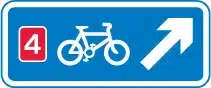
Example of a National Cycle Network route sign (blue sign with the red route number).
Blue Route Signs
The easiest way to recognise a National Cycle Network route is by its blue direction signs. These signs usually show a bicycle symbol, an arrow pointing in the direction of travel to get to the route and a red route number inside a small red box indicating which route it is.
Route Numbers
Each National Cycle Network route has its own unique number. For example, Route 6 runs from London to the Lake District, while Route 62 passes through parts of Greater Manchester. Simply following the matching route number will keep you on the correct path, even if the route changes between roads, cycle tracks and shared-use paths.
How to Follow a Route
As you ride, keep an eye out for the next blue National Cycle Network sign or red route number. They are usually placed at junctions and decision points to help guide you. If you’re planning a longer ride, it’s also worth checking the official National Cycle Network map before setting off, as some routes include temporary diversions or sections on quieter roads.
➡️ Related Guide: How to Plan Your First Cycle Commute Route
💡 Slow Lane Tip: If you’re commuting somewhere new, check whether part of your journey follows a National Cycle Network route. It can often provide a quieter, more relaxed alternative to busy main roads, even if it adds a minute or two to your journey.
Final Thoughts
Understanding UK cycle lanes, signs and road markings might seem like a lot to take in at first, but you’ll be surprised how quickly it becomes second nature. The more you ride, the more you’ll recognise different types of infrastructure and instinctively know the safest way to use them.
Remember, cycle lanes are there to help you, but they’re only one part of riding safely. Good road positioning, staying alert and anticipating what other road users might do are just as important as knowing what the signs and markings mean.
If you’re new to cycle commuting, don’t feel like you need to master everything on your first ride. Build your confidence one journey at a time, keep learning from every commute and, before long, you’ll wonder why cycling on the road ever felt intimidating.
If this article was helpful. I’ve made an E-Book to help you in your first few weeks of cycle commuting. Just click the link below.
Any questions, get in touch using the contact page.
– Dan
FAQ: Common questions about bike commuting essentials
Do cyclists legally have to use cycle lanes?
No is the simple answer. It’s really a personal choice and can depend on a number of factors ranging from cleanliness of the lane, the speed of the rider and the weather conditions.
Do cyclists have a speed limit?
Unless stated otherwise the speed limit on a shared path is 15kph and whatever the legal speed limit is on the road.
Are cycle lanes safer than riding on the road?
In most cases, yes. Well-designed cycle lanes help separate cyclists from traffic and improve visibility at junctions. However, you should always stay alert for hazards such as pedestrians, parked vehicles and drivers turning across your path.
How do I know if there are cycle lanes on my route?
There are many local resources out there that can identify your local cycle lanes, I have inserted a few below.

Manchester Council

Transport For London

Birmingham Council
What should I do if a cycle lane is blocked?
If it’s safe to do so, check behind you, signal if necessary and move into the main traffic lane to pass the obstruction. Don’t squeeze through narrow gaps or ride too close to parked vehicles just to stay inside the cycle lane.